CSR 2025
-
Editorial
Every company has its milestones, but some years serve as a powerful reminder of how far we’ve come.
2025 is one of them: it has been 25 years since I took over as CEO of Lactalis and committed the company to a decisive acceleration of its international development. We are proud to be the world’s leading dairy group, to see our products enjoyed in 150 countries and produced in our dairies and cheese factories in nearly 50 countries by nearly 85,500 employees!
This leadership position means we have a responsibility towards our stakeholders: customers, consumers, partners and, above all, our employees. While we have never tried to be the loudest voice, our global strategy for preserving nature and its resources by minimizing our impact is essential to continuing to promote the benefits of dairy products and empower our teams and partners to ensure sustainable performance. It is the best expression of our purpose in action: Nurture the future.

Sustainability is not a destination, it is a journey that we are taking together with ambition, commitment and determination.
Since 2019, this consistency has enabled us to transform our ambitions into concrete and measurable actions. Our CSR Report details our progress in 2025, with transparency and rigor, and highlights the work that still lies ahead, by tracking more than twice as many key performance indicators (KPIs) as in 2024. This year has been marked by several high‑impact projects across many of the group’s countries, which you can learn more about in this report. From Croatia to India, from the United States to France, from Australia to Brazil, our CSR teams have combined innovation and social commitment. I would like to extend my warmest congratulations to the teams behind these projects around the world.
In terms of climate, we are unwavering in our commitment to reducing our greenhouse gas emissions. Since 2019, our direct Scope 1 and 2 emissions have decreased by over 20%.
Within our value chain, more than 28% of our non-FLAG Scope 3 suppliers have now set science-based targets, a key step toward achieving the 73.8% target by 2028.
Animal welfare has become a well-established focus: since 2021, more than 18,000 dairy farmers in 21 countries have received support in this critical area from our team of dairy technicians, who are regularly trained using the CowSignals® method. With regard to our packaging, progress is being made toward a circular economy: by 2025, we will have successfully implemented more than 40 projects aimed at reducing packaging weight, incorporating recycled materials and improving recyclability. Almost a third of the materials used are now recycled and more than 80% of our packaging is recyclable “by design.”
For me, the standout CSR milestone of 2025 was the international recognition of this progress: the group is now in the top 20% of most advanced companies worldwide for animal welfare (BBFAW), earned a B rating from CDP Climate, and ranks among the top 30% of EcoVadis‑assessed companies.
These results are encouraging, as they reflect a clear improvement compared to previous years. They validate our strategy, and our tangible progress is a significant milestone. But a milestone is only a milestone, and I would like to take this opportunity to thank all the teams committed to continuing on this path, in a spirit of continuous improvement, guided by our ambition and pragmatism. Our leadership position, our global reach and our in-depth knowledge of the regions where we operate are powerful drivers of change that create value for our group and all our stakeholders.
In 2026, we will continue to implement decarbonization roadmaps, support our suppliers, initiate the transition that will lead us to a 30.3% reduction in FLAG Scope 3 emissions by 2030, and step up our efforts regarding water, biodiversity and packaging.
Lactalis continues to move forward with determination and transparency. Our transformation is based on a simple conviction: there is no profitability in the long term without responsibility. These last few years, marked by increasing climatic and economic uncertainties, have demonstrated the group's ability to move forward steadily without ever compromising the values that define us. Our progress has not been cyclical: it is structural, rooted in the long term and shared by all of our employees and partners. I wish to thank them all.
Agnès
BAUDET-BARBEZANTGroup General Manager for Quality, CSR & Crisis Management
The circular economy is a top priority for us. While packaging remains essential, in particular to protect our sensitive dairy products and avoid food waste, it also puts pressure on resources, the climate and ecosystems. That's why I'm proud of the results achieved by a dedicated team of buyers, R&D and marketing specialists, while fully recognizing the complexity of the task: by 2025, 32.9% of materials used were recycled and 82.2% of packaging was recyclable by design. We reduced our PVC tonnages by 50% compared to 2021.

We have seen the birth of a CSR community united by a common purpose, driven by our values and ready to act.
Finally, together with the HR team, we were committed to revitalizing our social initiatives by establishing the global Diversity, Equity and Inclusion (DEI) network: 60 ambassadors in 30 countries, three major international events, training on inclusive recruitment, increased engagement on disability issues, an introduction to intergenerational challenges, and the fight against gender-based violence. The inclusion of CSR training in the training catalog confirms that these topics are now integral to the group's overall strategy.
All these 2025 results are now internationally recognized, which is a real source of pride for the whole team. The time has come to embody this ambition in a signature that reflects our commitment and our approach to moving forward with determination, credibility and humility toward ever greater sustainability:
Our Sustainable Way to go
The global context is a cause for concern: climate trajectory towards global warming of around +2.8°C(1) increasing pressure on water resources, collapse of biodiversity. The challenges are immense. And so is our determination. We don't have all the answers today, but we have the will, the means and the responsibility to act. This is why, in 2026, we will strengthen our commitments, continue our actions and publish our Water and Biodiversity Policies.
This is a collective journey, and our first CSR seminar was a powerful reminder of that. For three days, our CSR community shared learnings, convictions and energy. We have seen the birth of a community united by a common purpose, driven by our values and ready to act. None of our results would be possible without the commitment of these CSR and Technical Expert Services, both in the countries where we operate and at headquarters. I would like to express my sincere and heartfelt thanks to them. Together, we can turn these challenges into opportunities by staying the course: Our Sustainable Way to go.
2025 marks a pivotal stage in our CSR journey and was a year of accelerated progress. We have now laid the foundations of a strategy structured around three pillars: preserving nature and its resources to limit our impact on the planet and guarantee our long-term performance; promoting the benefits of dairy products to contribute to accessible and sustainable nutritional diets; empowering our teams, partners and communities where we live to help them thrive. For the past five years, we have been ramping up our efforts in key issues: climate, packaging circularity, animal welfare and diversity. In 2025, we took a further step forward by analyzing our Impacts, Risks and Opportunities (IRO) and transforming our ambitions into measurable results!
For the Climate, we are continuing to reduce our emissions. Since 2019, our direct Scope 1 and 2 emissions have decreased by 20.5%, with significant progress in several countries, up to -71.4% in Spain!
Among this year’s many projects, two stand out: the roll out of XTL renewable diesel within Lactalis Logistics and Transport France, avoiding 34,000 metric tons of CO₂ equivalents, which equates to an 8% reduction in Lactalis France’s Scope 1 and 2 emissions.
The second example is Lactalis Do Brasil's commitment to more sustainable wood management, strengthening the traceability of wood energy and increasing the share of wood from managed forest rotations. Together, the local team and the group have carried out considerable work that has led to a 25% reduction in biogenic emissions in Brazil, amounting to nearly 83,000 tCO₂e compared to 2019. This pilot project, which is essential for our group objectives, is intended to be gradually rolled out in all countries facing similar challenges.
Our actions are intensifying across our entire value chain. 28,5% of our non-FLAG Scope 3 suppliers had science-based targets in 2025. More than 13,000 audits have been carried out since 2023 on farms in 14 countries to measure FLAG emissions. The roll out of reduction measures continued, with a -3,3% decrease of these FLAG emissions compared to 2021.
Animal welfare promotion continues its momentum: all of our 250 dairy technicians in 21 countries are regularly trained using the CowSignals® method, and by the end of 2025, around 85% of our direct farmers in 11 pilot countries and 45% in 10 other countries had been audited.
1)By 2100 with current policies, according to UNEP's 2025 report (" Emissions Gap "). -
Created in 1933 by André Besnier in Laval, Lactalis has been a family business for three generations. Lactalis is developing its activities to respond to its mission: to offer healthy, tasty and affordable products every day that bring us closer together. Driven by a passion for dairy, Lactalis strives to cultivate dairy know-how all over the world, as well as a wide range of tastes and products with high nutritional value. Lactalis intends to preserve, promote and share these with as many people as possible.
Lactalis has been developing dairy and cheese know-how since the company was founded, strengthening this expertise as it has grown. It offers consumers a wide range of dairy products in all categories: cheeses, liquid milk, yogurts, ultra-fresh dairy products, butters and creams, powdered formula and milk for infants and adults, clinical nutrition products and dairy ingredients.
In 2025, Lactalis collected more than 23 billion liters of raw milk from around 300,000(1) partenering farmers. Processing was carried out at 267 production sites located in 49 countries. Lactalis has nearly 85,500 employees worldwide and generated revenue of €31.2 billion in 2025.
Breakdown of consolidated revenue by category
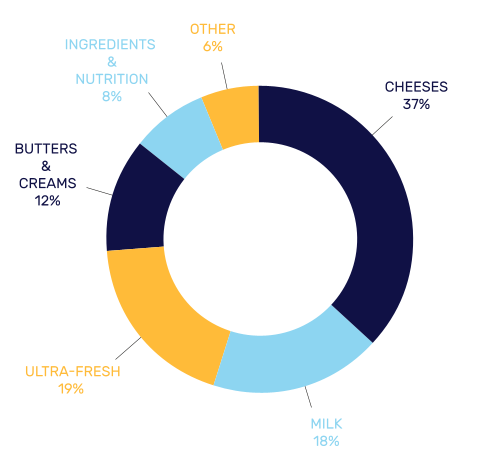
Lactalis' revenue is broken down into six product categories
The cheese category accounts for 37% of revenue, milk for 18%
ultra-fresh products for 19%
butter and cream for 12%, ingredients and nutrition for 8%, and other products for 6%

In 2025, Lactalis generated revenue of €31.2 billion, representing 2.9% growth.
In 2025, Lactalis collected 23.1 billion liters of milk.
In 2025, Lactalis had 85,500 employees.

No. 1
- Global dairy company
- Global group in the cheese market
- Global group in butter and cream
- Global player in PDOs and raw milk cheeses

No. 2
- Global group in the ultra-fresh dairy products market
- Global group in the liquid milk market

No. 9
- Global food company
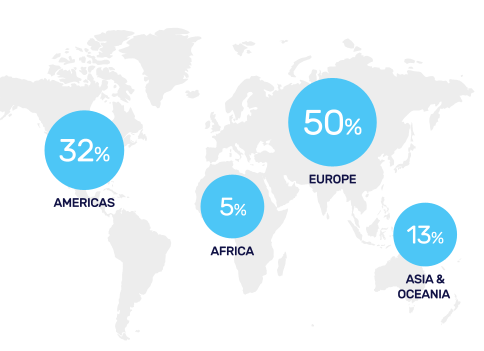
1)Estimate of the number of partenering farmers reviewed in 2025, according to a more precise methodology.Breakdown of consolidated revenue by geographical area
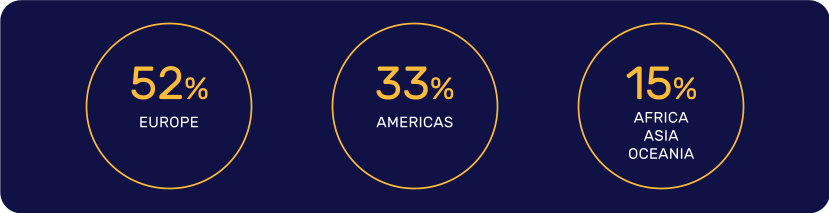
In 2025, Lactalis continued to strengthen its international presence.
UNITED STATES
General Mills Yogurt Business
On June 30, 2025, Lactalis took another step forward in its expansion across the Atlantic by finalizing the acquisition of General Mills’ yogurt business in the United States, which had been announced the previous year. This strategic transaction strengthens its presence in a particularly dynamic market and confirms our growth ambitions in the United States, the group's second largest market.
Nearly 1,000 employees from the dairies in Murfreesboro (Tennessee) and Reed City (Michigan), as well as the head office in Minneapolis (Minnesota), have joined Lactalis USA. Their know-how, combined with the heritage of emblematic brands – Yoplait®, Go-Gurt®, Oui®, Mountain High®, :ratio - consolidates Lactalis’ position in the ultra-fresh market and will support the development of a local and innovative offer.
This integration created "Midwest Yogurt," Lactalis’ new division dedicated to managing and developing yogurt activities in the USA, reflecting the desire to make this expansion a lasting part of the American dairy landscape.
URUGUAY
Granja Pocha
In 2025, Lactalis acquired Granja Pocha, a Uruguayan family business located in Juan Lacaze which, like the group, has been built around strong local roots and know-how passed down from generation to generation. Known for its cheeses, yogurts, desserts and dulce de leche marketed under the Colonial brand, it processes nearly 60 million liters of milk each year and occupies an important place in the local dairy landscape.
Granja Pocha's 160 employees have joined the teams of Lactalis Uruguay, which has moved to a new production site. This integration strengthens Lactalis’ presence in the Uruguayan market, supports the production of local cheeses and fresh products, and expands its offer, while preserving the country's dairy tradition.
PORTUGAL
Queijos Tavares
In 2025, Lactalis welcomed Queijos Tavares, a family-owned dairy group founded in 1996 and specializing in cow's, sheep's and goat's cheeses. Located between Seia and Fundão, in the heart of a region where cheese-making traditions play a prominent role, the group markets well-known brands such as Seia do Tavares, Serras de Penela, Damar and Monte da Soalheira, combining traditional expertise with innovation.
The 120 employees of Queijos Tavares have joined Lactalis Portugal, which now has two additional sites. This acquisition will enable us to expand the production and marketing of regional cheeses, broaden Lactalis’ local product range and build on the momentum generated by the acquisition of Sequeira & Sequeira, thereby strengthening the group’s presence in Portugal.
South Africa
Cremora
In April 2025, Lactalis expanded its presence in South Africa with the acquisition of Cremora, an iconic brand of coffee creamer that has been a staple in South African households for nearly 80 years. The acquisition of Cremora was accompanied by the addition of the Babelegi and Potchefstroom sites, which now strengthen our local presence and bring the total number of manufacturing sites in the country to seven. Nearly 300 employees have joined the local teams, further strengthening the momentum surrounding a now more diverse brand portfolio. The acquisition of Cremora supports the development of products that complement traditional dairy offerings and strengthens Lactalis’ presence in a market with strong demand.
2025 CSR performance
Our areas of intervention
Indicator name
Targets
2024 Results
2025 Results
Trend vs. 2024
Validation of the objective *
Contribution
to the SDGsPRESERVE NATURE AND RESOURCES
Climate
Percentage change in emissions related to Lactalis' SBTi commitment on Scopes 1 and 2 (including biogenic emissions) between 2019 and 2025 (%)
-46.2% by 2030
-13.7%
-20.5%


Percentage of suppliers (in emissions) with science-based commitments validated by SBTi, linked to Lactalis' SBTi commitment on Scope 3 non-FLAG (%)
73.8% by 2028
24%
28.5%

Percentage change in emissions related to Lactalis' SBTi commitment on Scope 3 FLAG (raw cow's milk collected) between 2021 and 2025 (%)
-30.3% by 2030
-5.0%
-3.3%


Biodiversity
Percentage of the palm oil and derivatives volumes purchased worldwide RSPO Mass Balance or Segregated Certified (%)
100%
by the end of 2025
92.1%
95.2%

Circular economy
Percentage of recycled materials in our packaging (%)
>30%
32.3%
32.9%


Metric tons of PVC in packaging (tons)
Aiming for elimination by 2025
866.0
752.9


Percentage of packaging recyclable by design (%)
Aiming for 100% by 2025
82.8%
82.2%

Percentage of virgin paper and board packaging covered by sustainable certification (%)
100% by 2023
95.9%
98.1%
Animal
welfare
Percentage of direct annual volume of collected cow raw milk in the 11 pilot countries coming from partnering farms regularly assessed on animal welfare, according to the Lactalis internal assessment method (at least once every 3 years) (%)
100% by 2025
55.3%
89.7%
Percentage of annual volume of purchased shell eggs worldwide coming from cage-free systems (%)
100% by the end of 2025
100%
100%

Percentage of annual volume of purchased egg products worldwide coming from cage-free systems (%)
100% by the end of 2025
92.0%
92.7%
LEVERAGE DAIRY GOODNESS
Food safety and quality
Percentage of industrial activities certified according to at least one of the five certificates: ISO 22000, FSSC 22000, IFS, BRC or SQF (%)
100% by 2026
88%
89%
EMPOWER OUR PEOPLE, PARTNERS AND COMMUNITIES
Diversity, equity and inclusion
Percentage of women in leadership positions (%)
Aiming for a balance in leadership positions by 2033
27.7%
28.3%


- 1The target is considered met once 98% of the stated value has been reached (tolerance: 2%).
-
1.1Strategic pillars and outlook
Lactalis seeks to offer the pleasure and nutritional benefits of dairy products to as many people as possible. The dairy sector also offers prospects for development around which Lactalis intends to mobilize its talent and stakeholders for profitable and responsible growth. These elements have structured the definition of Lactalis’ corporate project for 2033, the 100th anniversary of its creation. This strategy is divided into four pillars: people, products, performance and the planet.
1.1.1Consumption of dairy products worldwide
Dairy products enjoy a positive image around the world, particularly in emerging countries, where their consumption is essential to providing the population with essential nutrients at an affordable cost. The main categories each have their own image: nutrition and health for milk, pleasure and know-how for cheese, and taste and enjoyment for chilled dairy products.
Lactalis remains convinced that dairy products are a fundamental part of a healthy and sustainable diet (for all ages), and that there is no plant-based nutritional alternative to dairy products. Lactalis believes that dairy and plant-based products are complementary, and each have their own place as part of a balanced diet.
-
1.2Lactalis' business model
Creating value for all since 1933, with a hands-on approach

resources
MISSIONEmployees
Passionate women and men, recognized for their expertise, with a key role in rural development
85.500 employees
Iconic brands
A unique portfolio of iconic and historic international and local brands. Brands synonymous with quality, taste, pleasure and sharing
Over 250 brands (of which 31 with revenue > €100 million)
Purchased goods & services
A close relationship with our global and local suppliers and partenering farmers
23.1 billion liters of milk collected
Natural resources
A resource use strategy based on the principles of moderation, efficiency and transition
267 production sites
Operations & innovation
Robust quality processes. An industrial DNA preserving and transmitting world dairy cultures and know-how. Operations with local positive socio-economic impact. An innovation strategy for our consumers and to reduce our environmental impacts
World leader in PDOs (39)
Sales channels
An omni-channel sales strategy, sharing dairy cultures with local & export customers
Family shareholding
A family shareholding ensuring stability, an agile entrepreneurial spirit and a long-term strategy
100% of the shareholding held by the founding family
A family company offering healthy, tasty, and accessible products that bring us closer together every day
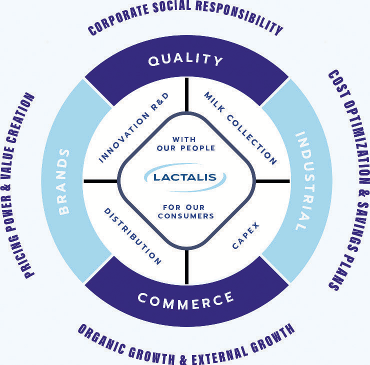
ValuesAmbition
Setting higher goals in the daily management of the business, and continually developing its professional and individual capabilities
Commitment
Showing true entrepreneurship, both individually and collectively. Being reliable, accountable and loyal
Simplicity
Acting with transparency, pragmatism and an open mind, while working effectively and being results-oriented
-
Ambition
Profitable and responsible growth
The ecosystem and shared values
Main ambitionsEmployees
A safe, caring and attractive working environment, a demanding health and safety policy, social dialog, competitive salaries and benefits, and a talent development policy
Consumers & Customers
A Quality organization ensuring food safety. A wide range of healthy, tasty and accessible dairy products, mostly made of milk. Helping consumers to adopt balanced diets worldwide via innovative sales channels and services
Industry
A leader engaged with national dairy federations to collectively develop qualitative and sustainable standards, and shape the future of our industry
Farmers
A close and most often direct relationship with some 300,000 partenering farmers in nearly 50 countries. Technical advice for a sustainable production of quality milk. 650+ intermediate milk collection centers in remote rural areas
Suppliers
A ripple effect for the activity of global and local suppliers through the group’s international operations, and exploration of partnerships favorable to innovation
Environment
Resource-efficient processes, contributing to our mission to feed the world with sustainable nutrition
For operations
Economically profitable activities, favoring continuous development of our local communities and territories
For employees
Zero work-related accidents, Zero occupational diseases
Aiming for a gender balance in management positions by 2033
Managerial survey in all countries
For consumers
100% of packaging will bear waste management information by 2025 (1)
100% of industrial activities certified according to at least 1 of the 5 certificates (ISO 22000, FSSC 22000, IFS, BRC, SQF) by 2026
For stakeholders
Increased dialog and partnerships with our stakeholders
For the planet
-46.2% GHG emissions (2) by the end of 2030 (Scopes 1 and 2) (3)
-30.3% GHG emissions by the end of 2030 (Scope 3 FLAG) (4) (5) (6)
73.8% of our suppliers and customers (7) in terms of emissions with science-based climate targets by 2028 (non-FLAG Scope 3) (8)
Carbon Net Zero by 2050 (9)
Zero deforestation by the end of 2025
100% of current and future packaging solutions for pillar products and packaging for product innovations screened using an eco-design tool by 2025 (1)
Minimum 30% recycled materials in our packaging (1)
Aiming for the elimination of PVC in our packaging by 2025 (1)
Aiming for 100% recyclable packaging by design in 2025 (1)
Aiming for 100% recyclable packaging in practice in 2033 (10)
100% of virgin paper and board covered by sustainable certification by the end of 2023 (1)
100% of direct milk volumes assessed on animal welfare by 2025 in 11 pilot countries (11) and by 2027 in 10 additional countries (12)
100% of dairy technicians trained in animal welfare by 2024 in the 11 pilot countries and the 10 additional countries
100% of volumes of shell eggs and egg products used in recipes coming from cage free systems by the end of 2025
- (1)Ambition on a set of 23 countries accounting for 85% of Lactalis revenue in 2019.
- (2)Greenhouse gases.
- (3)Base year 2019
- (4)FLAG: Forest, Land & Agriculture.
- (5)Commitment to 67% of Lactalis Scope 3 FLAG GHG emissions.
- (6)Base year 2021.
- (7)Covering purchased goods and services, capital goods, fuel and energy activities, transport and distribution, as well as the transformation of sold products.
- (8)Commitment to 67% of Lactalis Scope 3 non-FLAG GHG emissions.
- (9)Contributing to the achievement of carbon neutrality on a global scale.
- (10)Ambition for countries with an Extended Producer Responsibility EPR scheme, amid a set of 23 countries accounting for 85% of Lactalis revenue in 2019. All acquisitions since December 2019 are excluded at this stage.
- (11)Australia, Belgium, Brazil, Canada, France, Germany, Italy (excluding the Ambrosi subsidiary acquired in 2023), Spain, Sweden, the United Kingdom and the United States (excluding the Midwest Yogurt subsidiary acquired in 2025)..
- (12)Croatia, Czech Republic, the Netherlands, Poland, Portugal (excluding Sequeira subsidiaries acquired in 2024 and Tavares subsidiaries acquired in 2025), Romania, Slovenia, South Africa (excluding the Cremora subsidiary acquired in 2025), Switzerland and Turkey.
- .
-
1.3CSR strategy
Accountability is one of the guiding principles of our strategy. It guides our commitments to the women and men of our company, as well as our actions toward nature and the resources that are essential to our performance and to everyone’s future. It is also expressed through our products, which must be safe, healthy and accessible. In an increasingly demanding global environment, we have developed a robust and coherent CSR program that is fully integrated into our corporate strategy. This program enables us to take concrete, measurable and sustainable action in support of our mission and our stakeholders.
For many years, Lactalis has been promoting sustainable development. 2021 was a year of acceleration: we developed our CSR governance and prioritized our efforts in 3 areas where we could make a real difference: combating climate change, promoting animal welfare and advancing the circularity of our packaging. Four years later, we have achieved our first structuring objectives and we have seen our efforts recognized by external reference standards.
In the
top 20%
of the most advanced food companies on animal welfare
Independent global benchmark on animal welfare
Score B
on the CDP Climate
Independent global reference framework for climate action and environmental disclosure, by an independent nonprofit organization – grading from A to F
In the
top 30%
of all companiesassessed across all industries

Independent global assessment of overall Corporate Social Responsibility (CSR) performance
2025 was therefore a pivotal year. It was also the year of renewed momentum. Building on this solid foundation, we have developed a comprehensive CSR program that connects people, the planet and our business operations under a shared vision called Our Sustainable Way to go.
- provides a safe, caring and meaningful working environment for our teams;
- supports farmers, our partners and our suppliers in improving their practices, sharing clear expectations and a common vision;
- being a reliable CSR partner for our customers;
- offering our consumersproducts that are aligned with their values and can play a role in their efforts toward responsible consumption.
OUR CSR AMBITION
LEAD WITH RESPONSIBILITY TO NURTURE THE FUTURE
We act to preserve nature and resources and leverage
dairy goodness while empowering our people, partners and communities.We build on our global scale and deep local roots.
Together, in every country, we are committed to ensure
the sustainability of our activities and the well-being of future generations.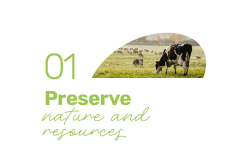
Combating climate change, preserving natural resources and protecting acosystems are both our responsibility and a matter of business continuity. From global policies to their local implementation, we progressively improve our practices, combining ambition and pragmatism, to reduce our impacts in each territory.
Our priorities:
- Fight against climate change and deforestation
- Promote animal welfare
- Develop packaging circularity and reduce waste
- Preserve biodiversity
- Steward sustainable water management
We are driven by a passion for dairy products. Their safety, quality and taste are at the heart of what we do. Dairy products play a key role in balanced and affordable diets in many countries. We continuously improve their nutritional profile and adapt them to local habits and culinary traditions, while ensuring clear information for consumers.
Our priorities:
- Guarantee the safety, quality and superiority of our products
- Contribute to healthy, affordable and accessible diets
- Adopt responsible marketing practices
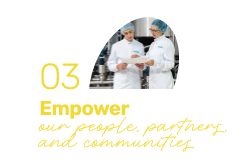
People are at the center of our strategy and long-term success. We aim to provide safe, engaging and inclusive working environments. Beyond our teams, we promote respect for human rights across our value chain and contribute to the vitality of the regions where we operate through local initiatives and partnerships
Our priorities:
- Commit to health and safety, training and well-being at work
- Promote diversity, equity and inclusion
- Uphold ethics and human rights
- Support the development of communities and territories
This is how we are moving toward sustainability.
This is how we nurture the future.
-
1.4Highlights in 2025
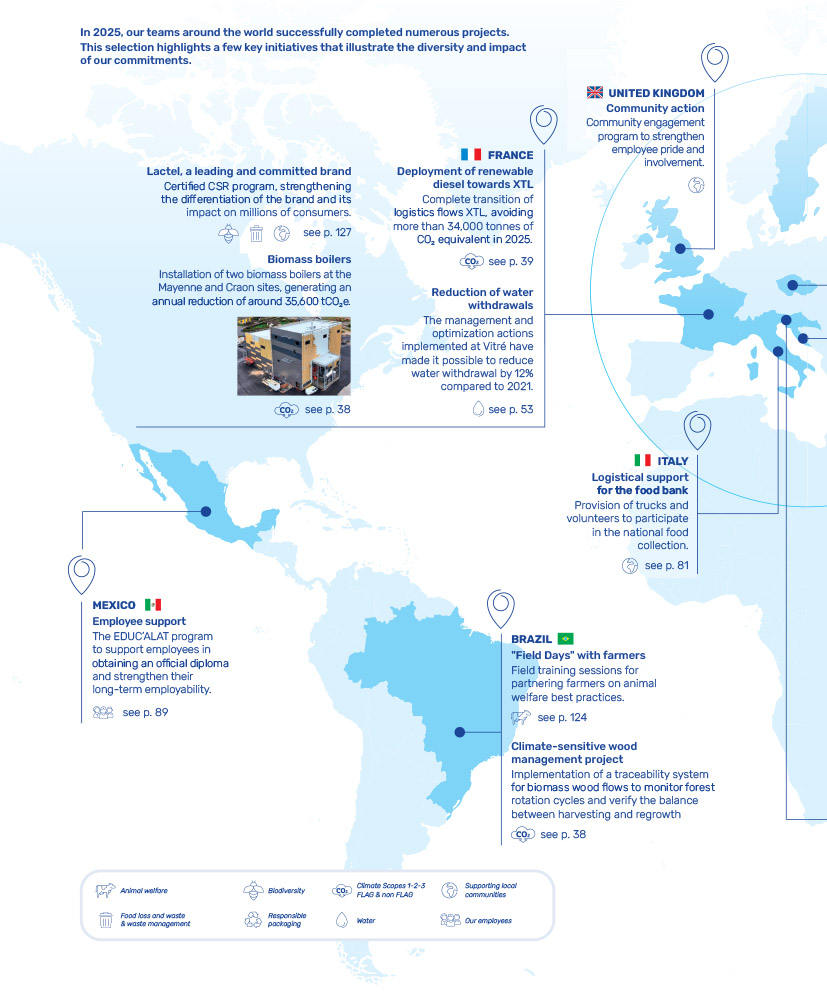
In the United Kingdom, a community engagement program aimed at boosting employee pride and involvement.
In France, four key developments are highlighted:
- - The transition to renewable diesel for XTL
- - The reduction in water withdrawals
- - Lactel’s certified CSR program
- - The installation of biomass-fired boilers
In Italy, Lactalis provided logistical support to the food bank.
In Mexico, a support program has been launched to help employees earn an official degree.
In Brazil, two key developments stand out:
- - The organization of “Field Days” with farmers
- - A timber management project that addresses climate issues
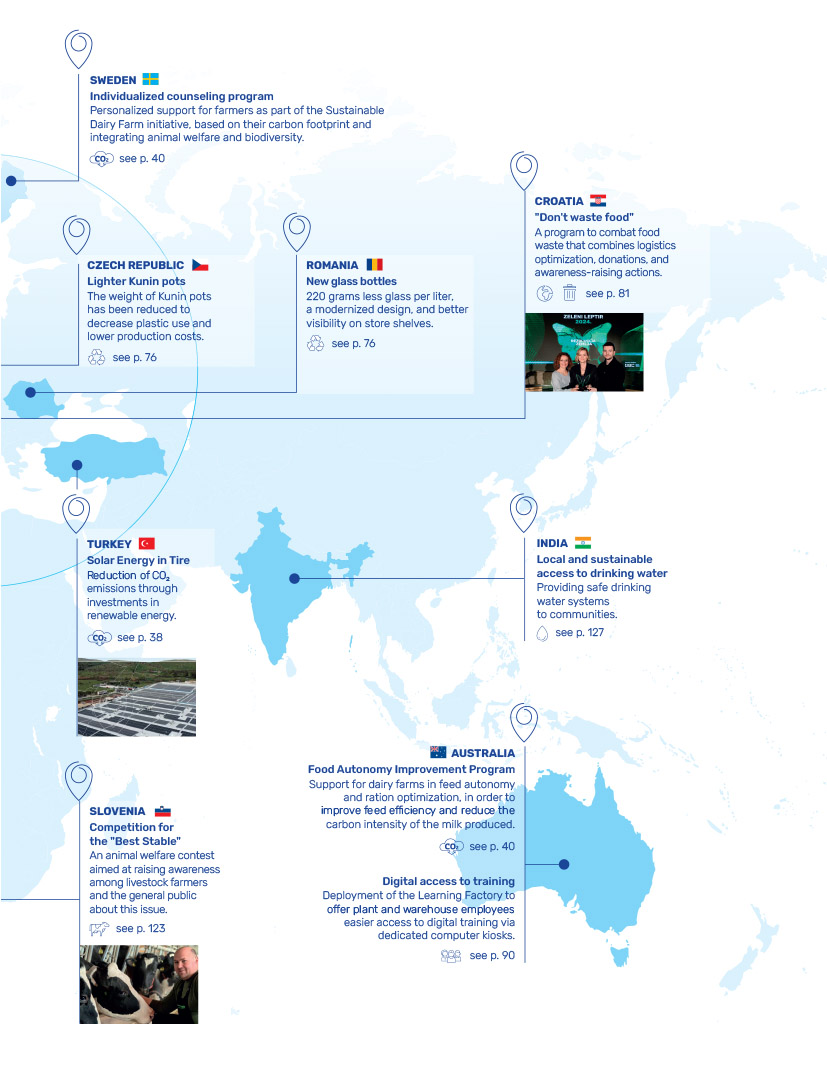
In Sweden, the implementation of a personalized counseling program.
In Croatia, the “Don't Waste Food” program to combat food waste.
In the Czech Republic, Kunin containers are being made lighter to reduce the amount of plastic used.
In Romania, the modernization of glass packaging.
In India, improving local and sustainable access to safe drinking water.
In Turkey, CO2 emissions are being reduced thanks to investments in solar energy.
In Australia, two key initiatives stand out:
- - A program to improve food self-sufficiency
- - The rollout of the Learning Factory.
In Slovenia, the organization of the “Best Stable” contest.
1)Estimate of the number of partenering farmers reviewed in 2025, according to a more precise methodology. -
2.1Basis for preparing the report
The CSR report covers the fiscal year from January 1 to December 31, 2025, in line with previous reports. This report is prepared on a voluntary basis, in anticipation of the requirements of the Corporate Sustainability Reporting Directive (CSRD).
The sustainability reporting scope corresponds to that established in Lactalis' financial statements. However, Lactalis is gradually integrating the new entities included in the consolidated financial scope into its sustainability reporting framework based on the maturity level of the entities in question. The scope of consolidation of KPIs is detailed in section 7. / Methodological note, p. 7.. When an acquisition is made, the entities concerned are included in the CSR reporting process within a maximum of three years after they join the group.
For the preparation of this CSR report, Lactalis conducted a double materiality analysis to identify material sustainability matters with regard to its business model and value chain. In line with this analysis, the report presents relevant information covering the entire value chain.
The published information is supplemented by the methodological note, which specifies the definition and calculation methodology for each indicator, its scope and its coverage rate. It also describes the origin and consolidation of the data, as well as the procedures for control, verification and comparability.
-
2.2Governance
The governance bodies of B.S.A., the parent company of Lactalis, are the Chairperson, the Management Board and the Supervisory Board.
- The administrative body is the Management Board. Its members are appointed by the Supervisory Board. The Management Board sets the strategic direction for B.S.A.’s operations and ensures their implementation in accordance with the company’s best interests, while taking into account the social and environmental implications of its activities. It is permanently involved in Lactalis' sustainability matters through its Chairperson, who participates in all stages of the process for identifying priority sustainability matters and approves the inclusion of new issues on the agenda as well as the strategy.
- The supervisory body is embodied by the Supervisory Board: its primary role is to oversee the management of Lactalis Management Board, particularly with regard to the proper implementation of the company’s strategy, including non-financial and sustainability aspects.
The composition and diversity of the members of B.S.A's administrative, management and supervisory bodies
- the Chairperson of the Management Board is the highest decision-making person on CSR strategy. He is involved at all stages of the selection of priority sustainability matters and validates new matters for consideration and the strategy. He is updated on a monthly basis on the progress of projects and receives a comprehensive half-yearly update on the CSR strategy during the Headquarters Committees, in which the Chief Operating Officer is involved;
- the Group Management Committee (CODIR) is the company’s second-highest decision-making body on the CSR strategy. It discusses and validates the strategy proposals for each matter. It is informed on a half-yearly basis of the implementation of the CSR roadmaps for each matter and the associated performance;
- the Group General Manager for Quality, CSR & Crisis Management reports directly to the CEO of Lactalis and is in charge of proposing a CSR strategy for the company, in collaboration with the Group CSR Department.
-
the Group CSR Department:
- –coordinates the implementation of Lactalis' CSR strategy and its update with the Technical Experts departments.
- –ensures the consistency of methods and reporting processes, the deployment of cross-functional tools and the monitoring of performance indicators,
- –coordinates the entire non-financial information and performance auditing process,
- –manages an international network of internal CSR referents,
- –ensures and develops dialog and transparency with internal and external stakeholders. In particular, it is responsible for developing and facilitating an internal CSR culture, notably through training and the organization of events and webinars.
For each sustainability matter, the Group CSR Department leads or co-leads Corporate working committees, which are often multifunctional. For each matter:
- an Operational Working Group, led by the CSR manager responsible for the relevant area, conducts a forward-looking analysis and develops proposals for strategies, policies, action plans and reporting methods. It brings together members of the Group CSR Department and Technical Experts from other departments. In line with Lactalis' strong local roots, the working groups regularly bring together Technical Experts from each country;
- a Strategic Committee discusses and validates these proposals and submits them to the Group Management Committee for approval. It is made up of the operational working group’s coordinators, the Group General Manager for Quality, CSR & Crisis Management, and the General Managers of the Technical Experts Services involved.
-
2.3Strategy
Strategy, business model and value chain
Lactalis' strategy is based on profitable and responsible growth, aiming to reconcile economic performance and long-term value creation while addressing the sustainability matters specific to the dairy sector. In a context of transition in production and distribution systems, and as a world leader in dairy products, Lactalis believes that creating sustainable value for the company and its stakeholders depends on its ability to integrate these matters into the core of its business model and strategic decisions.
For several years now, sustainability has been an integral part of the company’s strategy and business model, helping to guide and shape them. In 2021, this commitment to sustainable development was strengthened by structuring our CSR governance and sustainability approach around three priority areas: climate action, promoting animal welfare and advancing the circular economy.
In 2025, after two years of work and reflection on the double materiality analysis, and in a context of changing regulatory requirements, Lactalis reviewed and adjusted its CSR strategy. This initiative was carried out using a collaborative and pragmatic approach, guided by a commitment to continuous improvement and incremental learning.
The redefined CSR strategy, Our Sustainable Way to go, is based on a holistic roadmap aligned with the United Nations Sustainable Development Goals and the 10 principles of the United Nations Global Compact, of which Lactalis is a member.
-
Preserve nature and resources
Combating climate change, conserving natural resources and water, protecting ecosystems and promoting circularity in packaging are both a social responsibility and essential to the company’s long-term sustainability. Lactalis ensures that it deploys ambitious environmental policies, adapted to local realities, in a logic of continuous improvement aimed at reducing its impacts in each region. -
Leverage dairy goodness
A passion for dairy products drives all of Lactalis' activities. Product safety, quality and taste are of the utmost importance. Dairy products play an essential role in balanced diets that are accessible to all in many countries. Lactalis strives to constantly improve the nutritional profile of its products by adapting them to local culinary habits and traditions, while ensuring transparent information for consumers. -
Empower our people, partners and communities
People are at the heart of Lactalis' strategy and long-term performance. Lactalis ensures safe, inclusive working environments that promote engagement. In addition to its teams, Lactalis works to respect human rights throughout its value chain and contributes to the dynamism of the regions in which it operates through local initiatives and partnerships.
-
Preserve nature and resources
-
2.4Impact, risk and opportunity management
Global approach
Between 2023 and 2025, Lactalis revised its materiality analysis to meet the new regulatory requirements imposed by the European Corporate Sustainability Reporting Directive (CSRD) and the associated European standards (ESRS), published in the Official Journal of the European Union in December 2023.
The objective of the double materiality analysis is to identify sustainability matters that reflect both:
- impact materiality, i.e., the material, potential or actual, positive or negative, impacts of Lactalis' activities and its value chain on people and the environment in the short, medium and long term;
- financial materiality, i.e., the material, potential or actual, positive (opportunities) or negative (risks) financial effects related to sustainable development that affect Lactalis' financial performance.
These impacts, risks and opportunities (IROs) are assessed on a raw basis, i.e., without taking into account the strategies, policies and action plans already put in place by Lactalis to limit these negative impacts and risks, or to encourage these positive impacts and opportunities.
The analysis covers Lactalis’ entire consolidated scope and takes into account its entire value chain (upstream, in-house operations and downstream), including stakeholders who may be affected by its activities. The initiative was led by members of the Group CSR Department responsible for CSRD matters, with support from an external consulting firm, and was structured around the following steps:
-
3.1Climate change
Climate change is one of the greatest challenges of this century. In the absence of a rapid reversal of emissions trajectories, the scientific literature warns of major risks: erosion of biodiversity, weakening of food safety and lasting disruption of human activities by 2100. The effects of climate change are already visible - higher temperatures, increasingly frequent droughts and more intense storms - and are impacting the daily lives of regions.
These findings call for a coordinated mobilization of individuals, public authorities and companies to cut greenhouse gas (GHG) emissions and mitigate the effects of climate change. In this context, tackling climate change and adapting its activities to this new paradigm have been identified as a CSR priority for Lactalis.
The food and beverage sector – and its agricultural components upstream – plays a key role in cutting emissions and strengthening the resilience of production systems throughout the value chain. As one of the world’s leading agri-food companies and a leader in the dairy sector, Lactalis intends to use its size as a driver for climate action: identifying partners and solutions that have proven their worth locally, then helping them expand internationally, accelerating the transition to less carbon-intensive and more resilient production models.
Strategy
The group's purpose in action, "Nurture the future," reflects Lactalis' commitment to making a sustainable contribution to climate transition. The company is therefore aligning its climate strategy with a trajectory compatible with the Paris Agreement, aiming for net‑zero emissions by 2050, with targets validated by the Science Based Targets initiative (SBTi) in mid‑2024.
This strategy is based on a progressive and pragmatic approach: first, activating the levers over which the group has strong control, then expanding efforts through cooperation with suppliers, customers and all partners across the value chain. Thanks to the involvement of 85,500 group employees, this approach aims to sustainably transform operations and structure a credible and recognized climate trajectory over the long term.
Lactalis’ Climate Transition Plan, scheduled for publication in 2026, will provide a more detailed explanation of how the Lactalis’ climate strategy is structured and implemented across the entire value chain. This document will specify the directions taken – short-, medium- and long-term actions, dedicated governance, methods for monitoring the trajectory – and will explain the operational implementation of the commitments in industrial activities, supply systems and support for partners. It will provide a clear and homogeneous framework intended to strengthen the readability of the approach and to meet the growing demands for transparency. In the meantime, this CSR report outlines the essential components that will shape the forthcoming plan.
-
3.2 Pollution
Pollution, whether diffuse or accidental, can have a lasting effect on natural environments as well as human health. In a context where regulatory requirements are being strengthened, Lactalis is taking a gradual approach to reduce its impacts on air, water and soil.
Impacts, risks and opportunities
The double materiality analysis and description of the risk identification processes are presented in section 2.4 / Impact, risk and opportunity management, p. 2.4.
Pollution prevention is one of the pillars of Lactalis' Energy & Environment Policy, which applies to industrial sites.
A complementary study was conducted to identify the main impacts, risks and opportunities across the Lactalis value chain, based on interviews with the relevant teams, literature reviews and a study on Lactalis' impacts on biodiversity, including pollution, carried out with the ENCORE(1) and IBAT(2) tools and the WWF Biodiversity Risk Filter(3)
The IROs relating to water pollution are presented in section 3.3 / Water resources, p. 3.3.
The IROs relating to water pollution from packaging are presented in section 3.5 / Resource use and circular economy, p. 3.5.
In the agricultural sector, the use of inputs (fertilizers and pesticides) is the primary source of air and soil pollution, posing risks to soil fertility, the environment and human health.
At Lactalis' operating sites, accidental legionella contamination is the main source of air pollution, which can pose significant reputational risks for the group.
Road and sea freight operations for the transport of finished products are sources of air pollution, particularly related to driving diesel-powered vehicles and the emission of air pollutants such as NOx and SOx from ships. This pollution affects the environment and the health of populations.
Summary table of material impacts, risks and opportunities related to pollution
Type of IRO
Description of the IRO
Position in the value chain
Time horizon
Affected stakeholders
Actual/Potential
AIR Pollution
Negative impact
Air pollution from the use of chemical fertilizers in upstream agriculture
Nitrates and ammonia, toxic substances released into the air during the manufacture of fertilizers or when they are applied, can contribute to air contamination, in particular by leading to the formation of particulate matter (PM10) that is harmful to ecosystems and human health.
Upstream
ST/MT/LT
Suppliers
Farmers
Society
Actual
Negative impact
Air pollution from the use of pesticides in upstream agriculture
Pesticides used in the production of agricultural raw materials used by Lactalis (e.g.,: corn production for feeding dairy cows producing the milk collected by the group, growing sugar cane, sugar beet or fruit used as ingredients by the group), can volatilize and disperse in the air, contributing to air pollution and exposing ecosystems and populations to harmful chemicals.
Upstream
ST/MT/LT
Suppliers
Farmers
Society
Actual
Negative impact
Air pollution from the use of diesel vehicles
Due to the use of diesel vehicles for transportation activities, including the transportation of dairy products, pollutants such as nitrogen oxides, fine particulate matter, carbon monoxide and volatile organic compounds are emitted, contributing to local air pollution, environmental degradation and potential risks to human health.
Upstream
Operations
Downstream
ST/MT/LT
Suppliers
Employees
Actual
Negative impact
Air pollution from shipping emissions
Shipping emits air pollutants such as NOx and SOx, which degrade air quality and contribute to serious health problems for coastal societies.
Downstream
ST/MT/LT
Suppliers
Society
Actual
Negative impact
Air pollution due to legionella contamination in cooling towers and hot water circuits
Due to the growth of Legionella bacteria in hot water systems used for cleaning or storage, such as truck washes or storage tanks, as well as in cooling towers, inadequate maintenance can lead to contamination risks and expose employees to potentially fatal respiratory infections.
Operations
ST/MT/LT
Employees
Potential
Risk
Risk to brand, business divisions and products due to pollution at operational sites
Such incidents could harm Lactalis’ image and undermine the credibility of certain divisions and products, potentially leading to consumer boycotts, a loss of confidence and negative impacts on sales and brand value.
Operations
ST/MT/LT
N/A
SOIL Pollution
Negative impact
Soil pollution due to the use of chemical fertilizers in upstream agriculture
Nitrates and ammonia, toxic substances released during the manufacture of fertilizers or when they are applied, can lead to soil contamination, particularly through leaching.
Nutritional imbalances caused by the use of fertilizers in agriculture, particularly in corn cultivation, degrade soil quality and threaten the stability of ecosystems.
Upstream
ST/MT/LT
Suppliers
Farmers
Actual
Negative impact
Soil pollution due to the use of pesticides in upstream agriculture
Pesticides used in the production of agricultural raw materials used by Lactalis (e.g., the production of corn for feeding the dairy cows that supply the group’s milk, as well as the cultivation of sugar cane, sugar beet or fruit used as ingredients by the group), can introduce toxic chemicals into the soil, harming biodiversity and ecosystem health.
Upstream
ST/MT/LT
Suppliers
Farmers
Society
Actual
Negative impact
Soil pollution from oil and fuel leaks in road accidents or milk storage operations
Fuel and oil leaks, whether caused by vehicle accidents or by overflows and leaks from fuel oil tanks used for heating, generators or refueling, can lead to soil degradation and long-term harm to surrounding ecosystems.
Upstream
Operations
Downstream
ST/MT/LT
Employees
Suppliers
Potential
Risk
Risk to brand, business divisions and products due to pollution and degradation of ecosystems in all direct company activities
Such incidents could harm Lactalis’ image and undermine the credibility of certain divisions and products, potentially leading to consumer boycotts, a loss of confidence and negative impacts on sales and brand value.
Operations
ST/MT/LT
N/A
Risk
Risk to brand image, business divisions and products due to pollution and degradation of ecosystems in upstream agriculture
Such incidents could weaken Lactalis' credibility as a responsible company, reducing consumer and stakeholder confidence as well as brand value.
Upstream
ST/MT/LT
N/A
Risk
Risk of increased costs due to lower agricultural yields resulting from significant pollution exposure
Soil pollution can reduce soil productivity or directly contaminate upstream crops, leading to lower yields of raw materials. This reduction in available supply may increase purchasing costs and limit supply, which ultimately impacts Lactalis' revenues.
Upstream
ST/MT/LT
N/A
WATER Pollution
The IROs relating to water pollution are discussed in section 3.3 / Water resources, p. 3.3.
The IROs relating to water pollution from packaging are discussed in section 3.5 / Resource use and circular economy, p. 3.5.
Legend: short-term (ST); medium-term (MT); long-term (LT).
-
3.3 Water resources
Water is an essential resource for Lactalis' operations and those of its entire value chain. Without water, none of the company's activities are possible: it is impossible to produce milk, a living resource directly dependent on animals’ hydration and availability of fodder; it is impossible to process this milk in factories, whose operation relies on water, particularly for cleaning, heat production (steam) or cooling (cooling towers). Water is therefore essential to Lactalis’s business continuity, product safety and ability to supply the markets.
However, this resource is both limited and increasingly constrained. Only a very small fraction of the water present on Earth is actually available for human uses, and this availability is declining due to the combined effects of population growth, rising energy, agricultural and industrial demands, and disruptions to the water cycle. Climate change is exacerbating these tensions: it is altering the spatial and temporal distribution of precipitation, increasing evapotranspiration and intensifying extreme weather events. These pressures lead to water stress, i.e., an imbalance between water demand and the amount of water available.
These disturbances are already being seen in more frequent and intense climatic hazards, such as prolonged periods of drought, heat waves and flash floods, which directly affect the regions where Lactalis operates. They also impact the availability of water for crops, reducing agricultural yields and exacerbating risks to the supply of milk and other agricultural raw materials. For a global agri-food sector, this development represents a major challenge: preserving access to water while limiting its impact on ecosystems.
In addition to these availability issues, there is the worrying deterioration in water quality. The intensification of agriculture, increasing urbanization, industrial waste, erosion and run-off accentuated by extreme weather events contribute to the contamination of waterways and groundwater. Deterioration in water quality affects the entire value chain: it compromises crop irrigation, degrades soils and reduces agricultural yields; it weakens animal health and can alter milk quality; it complicates and increases the cost of treatment processes at plants while heightening the risk of non‑compliance; finally, it damages aquatic ecosystems, restricts uses for local communities and intensifies pressure on the resource.
Availability and quality of water thus become two aspects that are inseparable from territories’ water resilience. For a global agri-food leader such as Lactalis, preserving this resource means not only reducing its dependence on it, but also actively contributing to the conservation of aquatic environments, the reduction of discharges and the protection of the watersheds where its operations are located.
Impacts, risks and opportunities
The double materiality analysis and description of the risk identification processes are presented in section 2.4 / Impact, risk and opportunity management, p. 2.4.
As water resources are a highly material issue for Lactalis, additional studies were carried out using WRI's Aqueduct tools(1) and the Water Risk Filter(2) in order to identify the production sites, dairy farms, commodities and supply countries most exposed to water‑related risks across the value chain, both today and by 2050 under a Business‑as‑Usual scenario.
The specific issues of water pollution were studied via the Water Risk Filter analysis as part of the work carried out on water resources, but also via a literature search as part of the study carried out on pollution.
Quantitative water resource management
The analysis of upstream milk exposure to water stress was carried out in 2025, and covers nearly 20,000 dairy farms and milk collection points in 17 countries: France, Brazil, Italy, United States, South Africa, India, Australia, Poland, United Kingdom, Belgium, Germany, Romania, Slovenia, Portugal, Czech Republic, Croatia and Spain. For 5 other countries, in the absence of precise data on farm locations, the analysis relied on the location of the major dairy regions (Canada) or that of Lactalis' operating sites (Turkey, Sweden, Switzerland, the Netherlands). To supplement the assessment of water stress risk for dairy farms, the study also took into account the water footprint of milk (national average as calculated by the Water Footprint Network).
The watersheds most exposed to the risks of water pollution and water stress are located in four priority regions: the Mediterranean rim, India, South Africa and Southeast Australia. In total, 15% of the dairy farms or collection points studied are located in extreme or very high water stress areas, and this portion is projected to double by 2050 according to the Business-as-Usual scenario.
61% of the dairy farms and collection points studied are located in areas with a high or very high risk of water pollution. The most exposed watersheds are found in India, Turkey and Europe. According to the Business-as-Usual scenario, this proportion would rise to 83% in 2050.
The exposure analysis of other commodities was carried out in 2025 and covers 16 commodities and their 45 countries of origin: paper/cardboard, cane sugar, beet sugar, palm oil, cocoa, coffee, strawberry, apple, orange, peach, raspberry, mango, blueberry, vanilla, pineapple and banana. In order to prioritize the raw materials at highest risk, the company factored in the water footprint of their production by country (national average as calculated by the Water Footprint Network) and purchase volumes in its analysis.
Vanilla, cocoa and coffee are the commodities with the highest water footprint, but cane sugar and beet sugar are most exposed to the risks of water stress and poor water quality.
The exposure analysis of operational sites to water stress was carried out in 2025 and covers all of the company's production sites.
Lactalis has developed a score to assess the risk of water scarcity at industrial sites. This score is based on indicators from the Aqueduct database related to surface water and groundwater. The assessment of risk to surface water is based in particular on the annual water stress score projected for 2050 (Business-as-Usual scenario) and the current risk of drought, as well as on the water stress score observed during the most critical month. The groundwater risk analysis takes into account historical changes in piezometric levels. All of these parameters make it possible to obtain a consolidated view of the water vulnerability of sites and to better guide action plans.
Qualitative water resource management
This is the stage of the value chain with the greatest impact in terms of water pollution. The main source of water pollution in upstream dairy and other agricultural commodities purchased by the group is due to the use of inputs (fertilizers, pesticides, etc.) that can be leached into surface water or infiltrate into groundwater.
The exposure analysis of operational sites to water pollution was carried out at all of the company's production sites in 2025. The study identified the countries, watersheds and sites most at risk of poor water quality.
The main source of water pollution linked to Lactalis' activities at its operational sites is due to the discharge of effluents rich in organic matter. Most of these effluents are treated by internal or external wastewater treatment plants.
The IROs relating to water pollution from packaging are presented in section 3.5 / Resource use and circular economy.
Summary table of material impacts, risks and opportunities related to water resources
Type of IRO
Description of the IRO
Position in the value chain
Time
horizonAffected stakeholders
Actual/
PotentialNegative impact
Depletion of water resources caused by Lactalis' activities, whether directly (industrial operations) or indirectly (production of milk and other raw materials).
Water resources are unevenly available on Earth. Overconsumption of water resources increases the pressure on the resource and the competition between the different needs of the population. A significant portion of the group's direct and indirect activities are located in areas at risk of water stress. Milk in particular accounts for around 95% of the indirect water footprint of raw materials purchased by Lactalis, due to the volumes of blue, green and grey water required for livestock, pasture and fodder production.
Upstream
Operations
ST/MT
Suppliers
Farmers
and Society
Actual
Negative impact
Pollution of water resources caused by Lactalis' activities, directly (industrial operations, logistics operations) or indirectly (production of raw materials, end-of-life of packaging).
The main sources of water pollution are linked to upstream agriculture (via chemical pesticides, herbicides and fertilizers, as well as chemical and biological contaminants related to manure management); discharges from industrial operations (organic matter, nitrogen, phosphorus, etc.); transportation (NOx and SOx emissions, fuel and oil leaks); at the end of the packaging's life (plastic pollution).
Upstream
Operations
Downstream
ST/MT/LT
Suppliers
Farmers
and Society
Actual
Risk
Loss of income due to a decline in milk production and other agricultural commodities caused by water stress, leading to supply shortages or higher purchase prices for raw materials.
Water stress has a negative impact on milk production, as dairy cows need 60 to 120 L of water per day on average, and up to 200 L on warmer days. Low water intake is linked to low feed intake, which decreases milk production and increases the risk of disease.
Water stress can also lead to a decrease in grassland production and forage or cereal harvests, impacting livestock feed.
Upstream
ST/MT
N/A
Risk
Loss of income due to contamination of milk and other agricultural commodities or a decline in production caused by water pollution, causing supply difficulties or an increase in the purchase price of raw materials. If this contamination is transmitted to finished products, it can also impact consumers and cause recalls.
Chemicals, pesticides and microplastics can contaminate milk and dairy products, making them unfit for human consumption and leading to a loss of income.
Upstream
Downstream
ST/MT
N/A
Risk
Legal risk related to a proven case of water scarcity resulting from Lactalis' activities.
Upstream
Operations
ST/MT
N/A
Risk
Legal risk related to a proven case of water pollution due to Lactalis' direct and indirect activities, such as water pollution caused by discharging untreated wastewater or other solid and plastic waste.
Upstream
Operations
ST/MT
N/A
Risk
Reputational risk related to the pollution of water resources in agricultural upstream activities, operations or the supply chain, potentially resulting in product contamination.
Risk to the brand image, business divisions and products in the event of water or product contamination in upstream activities, operations or the supply chain. Such incidents could undermine the company’s credibility as a responsible business, thereby reducing consumer and stakeholder confidence as well as overall brand value.
Upstream
Operations
Downstream
ST/MT
N/A
Risk
Operational slowdowns or shutdowns resulting from water shortages, such as lack of supply or regulatory limits on water use.
Operations
ST/MT
N/A
Risk
Operational slowdowns or shutdowns caused by rising water pollution that makes it impossible for sites to obtain the necessary water quality.
Operations
ST/MT
N/A
Risk
Increase in investments and maintenance costs related to the treatment of polluted or poor quality water to obtain the water quality required for food production or for discharges to the natural environment.
Operations
ST/MT
N/A
Legend: short-term (ST); medium-term (MT); long-term (LT).
-
3.4Biodiversity
Biodiversity loss has become a major global concern as the planet faces its sixth mass extinction. This is all the more true given that this sixth extinction has two distinctive features: first, it appears to be occurring much more rapidly than the previous five, and second, it is the first mass extinction for which human activities are the primary cause.
As a leading food company, Lactalis believes that it has a role to play in preserving biodiversity, both impacting it and depending on it.
Indeed, on the one hand, the group contributes significantly to four out of the five main pressures driving biodiversity loss, as identified by the IPBES(1): land use, direct exploitation of natural resources (namely, water), climate change and pollution. Most of these impacts are linked to the group’s upstream agricultural value chain, and particularly milk production by its partnering farmers (e.g. risks of deforestation and land conversion through animal feed, water consumption, greenhouse gas emissions, pollution from pesticides, fertilizers, and manure). To a lesser extent, the group may also impact biodiversity through its own operations (e.g. 50% of Lactalis' industrial sites worldwide are located in or near areas of high biodiversity importance).
On the other hand, Lactalis relies heavily on biodiversity, and the ecosystem services it provides. For instance, the company requires significant quantities of clean water to operate its industrial sites properly. Similarly, its upstream agricultural value chain depends on pollinators, healthy soils, and a variety of dairy cow breeds to produce high-quality milk.
impacts, risks and opportunities
The double materiality analysis and description of the risk identification processes are presented in 2.4 / Impact, risk and opportunity management, p. 2.4.
In 2025, Lactalis conducted an in‑depth assessment of the impacts and dependencies of its activities on biodiversity across its entire value chain (upstream, operations, and downstream). This analysis incorporated:
- for impacts: the five pressures on biodiversity as identified by the IPBES (land use, direct exploitation of natural resources, climate change, water, soil and air pollution, and invasive species) and the state of ecosystems;
- for dependencies: the supporting, provisioning, regulating and cultural services provided by ecosystems, known as “ecosystem services.”
Thanks to the ENCORE(2) and IBAT(3) tools, the assessment made it possible to identify Lactalis' main impacts, risks and opportunities in relation to biodiversity as well as the priority raw materials and operational sites in this regard.
- overall, Lactalis generates biodiversity impacts across its entire value chain and on four of the main pressures: land use, direct exploitation of natural resources, climate change, and water, soil and air pollution. Impacts on invasive species are considered non-material;
- most of Lactalis' material impacts on biodiversity arise upstream in its value chain, particularly from the production of milk and other agricultural raw materials such as sugar, palm oil, cocoa, coffee, paper and board used for packaging, and woody biomass used for energy production. Upstream activities indeed generate the group’s most significant negative impacts on deforestation and conversion of natural ecosystems (land use), hydrological imbalances (direct use of natural resources), greenhouse gas emissions (climate change), and water, soil and air pollution (pesticides, fertilizers and livestock effluents). Some raw materials, such as soy used in animal feed, also contribute indirectly. That said, Lactalis’ upstream activities, and in particular milk production, also have positive impacts on biodiversity, notably through the preservation and management of permanent grasslands, which provide habitats for a wide range of plant and animal species;
- the group also has potential negative material impacts on its own operations (land use, direct exploitation of natural resources, climate change, water and air pollution). Indeed, the results of the IBAT analysis indicate that 184 sites (i.e. nearly 50% of the sites studied – industrial sites and warehouses) are located in or near areas of high biodiversity importance, i.e. in or near protected areas, key biodiversity areas or threatened species.
In terms of risks, regulatory changes and the growing consumer awareness of deforestation and biodiversity issues pose major challenges for Lactalis. The group must therefore meet these new requirements to avoid legal, reputational or operational risks.
Conversely, the deployment of regenerative agriculture practices, which deliver multiple biodiversity benefits, such as preserving natural habitats, reducing risks of water stress and water and soil pollution, reducing climate‑related impacts and enhancing carbon storage in soils, offers Lactalis an opportunity to strengthen its resilience while responding to stakeholder expectations.
More specifically, Lactalis’ material IROs related to biodiversity are presented in the table below, bearing in mind that:
The IROs relating to the direct exploitation and pollution of water are addressed in section 3.3 / Water resources.
The IROs relating to climate change are addressed in section 3.1 / Climate change.
The IROs relating to air and soil pollution are addressed in section 3.2 / Pollution.
The IROs relating to water pollution from packaging are addressed in section 3.5 / Resource use and circular economy.
Summary table of material impacts, risks and opportunities related to biodiversity
Type of IRO
Description of the IRO
Position in the value chain
Time
horizonAffected stakeholders
Actual/
PotentialNegative
impactSoil degradation, deforestation and conversion of natural ecosystems related to conventional agricultural practices
The supply of raw materials from agricultural and livestock activities, such as milk, sugar (cane and beetroot), palm oil, cocoa, coffee, paper and board, or woody biomass, leads to multiple major environmental impacts. On the one hand, these practices can contribute to soil degradation through the loss of organic matter, erosion or compaction, compromising soil health and ecosystem productivity in the long term. On the other hand, production of these raw materials requires, directly or indirectly (e.g. via animal feed), large areas of land, which frequently leads to deforestation and conversion of natural ecosystems. This is particularly the case for soy production (used in animal feed) in Brazil, Argentina and Paraguay, corn (also used in animal feed) in tropical regions and palm oil in Indonesia. All of these practices result in a significant loss of natural habitats and a decline in biodiversity, while also disrupting essential ecosystem services such as water availability and regulation, carbon storage and climate regulation, and soil fertility.
Upstream
MT/LT
Suppliers
Farmers
SocietyPotential
Positive
impactPositive contribution of permanent grasslands and grazing to biodiversity
Maintaining and encouraging good management of grasslands, with a reasonable density of dairy cows per hectare, supports the enrichment and resilience of ecosystems. By allowing ruminants to graze on various land, grazing contributes to plant diversity and natural fertilization, promotes insect life and nurtures perennial ecosystems. This practice helps protect grasslands, improve local biodiversity and enhance the overall health of agricultural landscapes.
Upstream
MT/LT
Farmers
SocietyActual
Negative
impactDegradation and artificialization of natural habitats at operational sites
Nearly 50% of Lactalis' operating sites worldwide are located in or near areas of high biodiversity importance (protected areas, key biodiversity areas, presence of threatened species). Lactalis' activities within the perimeters of these sites and any work carried out there may degrade the natural habitats of the animal or plant species present (waterproofing of surfaces, light and noise pollution, etc.).
Operations
ST/MT
Society
Potential
Risk
Legal risk arising from increasingly stringent environmental regulations governing deforestation and biodiversity preservation
The strengthening of European Deforestation Regulations (EUDR) and the introduction of new biodiversity‑protection rules create both legal and reputational risks for Lactalis. The company's dependence on forest-hazardous primary materials, such as soy for animal feed, increases its exposure to non-compliance costs, market access restrictions and the potential loss of its license to operate.
Upstream
ST/MT
N/A
Risk
Operational risks and costs related to customer and consumer requirements regarding deforestation and biodiversity preservation
Operational risk related to Lactalis' dependence on an agricultural model that may negatively impact forests and biodiversity, and to increased requirements from retailer customers and consumers to address deforestation and biodiversity issues. Compliance with these requirements may result in costly adaptation measures and reduced agricultural productivity. The financial burden of transitioning to more sustainable practices and meeting consumer demands could disrupt supply chains and increase Lactalis's overall production costs.
Upstream
ST/MT
N/A
Risk
Business risks related to dependence on natural resources and ecosystem services
Medium- and long-term business risks related to Lactalis' dependence on natural resources and ecosystem services, such as soil fertility, pollination, pest and disease regulation, and the availability and quality of water for agricultural production. The degradation or loss of these services could undermine the stability of Lactalis' supply chain, increase production costs and weaken the company's resilience. For example, soil degradation could cut overall agricultural productivity by around 12% over the next 25 years.
Upstream
MT/LT
N/A
Opportunities
Strategic opportunity arising from the increased resilience gained through the adoption of regenerative agriculture practices
Strategic opportunity arising from implementing regenerative agriculture practices that restore or protect biodiversity, maintain soil fertility and enhance ecosystem services. These practices can help improve agricultural yields, reduce or at least maintain production costs, reduce the working time of suppliers and farmers and improve the long-term resilience of agricultural production.
Upstream
MT/LT
N/A
Opportunities
Reputational opportunity thanks to initiatives in support of regenerative agriculture
Reputational opportunity thanks to Lactalis' efforts to develop and promote regenerative agriculture and demonstrate leadership in nature conservation throughout its value chain. By helping its suppliers adopt sustainable practices and positioning itself as a food company with little or no negative impact on the environment, Lactalis can strengthen its public image, build customer and consumer trust, and increase brand loyalty.
Upstream
Downstream
ST/MT
N/A
Legend: short-term (ST); medium-term (MT); long-term (LT).
-
3.5Resource use and circular economy
The circular economy is now emerging as a structuring driver of transformation for food and beverage companies, which are facing resource scarcity, rapidly evolving regulations on packaging and waste, and growing societal expectations.
In a sector based on processing living and sensitive raw materials, the optimization of material flows, loss prevention and waste recovery are essential levers for reconciling industrial performance, food safety and environmental responsibility. The adoption of more circular models makes it possible to preserve product quality while optimizing the use of resources throughout the value chain.
As the world's leading dairy group, Lactalis places the circular economy at the heart of its CSR strategy and operating model.
This ambition applies to the entire value chain, from selecting raw materials and collecting milk to the manufacturing, packaging, distribution and end-of-life management of products. The volume of packaging required to ensure food safety and product quality, the need to reduce food waste and the disparities of waste management infrastructure across countries underscore the importance of a structured and consistent approach at international level.
In this context, Lactalis is continuing to implement a circular model based on three complementary priorities:
- improving packaging circularity;
- preventing food loss and waste at every stage of the life cycle;
- reducing the amount of waste produced and recovering waste throughout the value chain.
These three areas make it possible to address the entire life cycle of products by integrating Lactalis' industrial know-how, the diversity of its markets and the local characteristics of collection, recycling and recovery systems.
By making the circular economy a cornerstone of its sustainable development strategy and embedding it in its daily operations, Lactalis reaffirms its commitment to improving resource efficiency, sustainably reducing its environmental impact and contributing to a more resilient, efficient and sustainable food system for all its stakeholders.
Impacts, risks and opportunities
The double materiality analysis and description of the risk identification processes are presented in section 2.4 / Impact, risk and opportunity management, p. 2.4.
Dairy products are quickly perishable and suitable packaging is essential to protect them, ensure food safety and reduce food loss and waste. In addition, this packaging can also be a major source of pollution and overconsumption of resources, posing a threat to the environment and biodiversity. Aware of these challenges, three priority areas have been identified for assessing the impacts, risks and opportunities associated with the circular economy: packaging circularity, food loss and waste, and waste management.
A complementary study was conducted to identify the main impacts, risks and opportunities based on interviews and literature reviews. Working groups have been set up to explore and specify Lactalis' future direction in these priority areas.
The main issues for Lactalis are related to the use of resources necessary for the production of dairy products and food packaging, as well as the pollution and greenhouse gas emissions generated by waste and its management throughout the value chain.
However, as the world's leading dairy group, Lactalis has the opportunity to play a key role in the development of circular economy practices throughout its value chain by supporting players in the waste collection and recovery sector, particularly in regions where waste management systems are underdeveloped, such as South Asia (India), Central America (Brazil) and Oceania (Australia). Lactalis' expertise in milk processing and the production of dairy products around the world is also a major lever in the fight against food loss and waste.
Due to the growing awareness of consumers and distributors around the challenges of the circular economy, Lactalis is facing stringent requirements on its commitment in favor of this circular economy and against food loss and waste. Changes in regulations regarding food loss and waste, and waste management, including packaging, are further tightening compliance requirements. These expectations are driving Lactalis to innovate and invest in order to meet these new standards, or face reputational, legal or operational risks.
Nevertheless, integrating circular economy strategies throughout its value chain will enable Lactalis to optimize costs related to raw material procurement, product distribution and waste management.
Plastics are a major concern for Lactalis because of their essential role in food packaging safety. While their versatility primarily ensures a continuous supply of safe dairy products, thus addressing Lactalis’ top priority, plastics also pose significant challenges in terms of environmental protection, biodiversity and human health. However, viable alternative solutions that meet the stringent requirements for food safety, availability at scale and cost-effectiveness are still limited.
Summary table of material impacts, risks and opportunities related to the circular economy
Type of IRO
Description of the IRO
Position in the value chain
Time
horizonAffected stakeholders
Actual/
PotentialPackaging circularity
Negative impact
Depletion of stocks of renewable and non-renewable resources, such as oil for plastics or wood for paper and board, and degradation of the climate and biodiversity due to the overconsumption of virgin materials. It should be noted that the use of virgin materials is often required for food contact packaging, for food safety reasons.
Upstream
ST
Society
Actual
Negative impact
Environmental pollution due to the rejection of non-biodegradable and non-recyclable packaging
Plastics face a lack of recycling capacity, particularly outside Europe and in developing countries with limited waste management systems (heterogeneity in the maturity and efficiency of recycling channels in the various countries where Lactalis operates).
Downstream
ST
Society
Actual
Negative impact
Deterioration of human health and contamination of the environment due to poor management of packaging waste.
Plastics, and especially multi-material plastic packaging, are more likely to be discarded in countries with a lack of recycling capacity, especially outside Europe, and in developing countries with limited waste management systems (heterogeneity of maturity and the efficiency of recycling channels in the various countries in which Lactalis operates).
Downstream
ST
Consumers
Society
Actual
Positive impact
Development of the circular economy in the upstream and downstream value chain thanks to the support of local collective projects to develop sorting and recycling channels.
Upstream
Downstream
LT
Suppliers
Consumers
Public institutions
Potential
Risk
Loss of revenue due to products being delisted by distributors as a result of non-compliance with packaging requirements (e.g., rating agencies), especially in Europe. Plastic packaging and multi-material packaging containing plastic are particularly vulnerable.
Downstream
ST
N/A
Risk
Increased costs and capital expenditures (CapEx), and production slowdown due to new legal requirements
New legal requirements regarding the use of recycled raw materials or the implementation of new packaging standards may increase the cost of purchasing recycled raw materials. Additional investments in new equipment may also be required to comply with new packaging requirements. Delays in the development of this new packaging and the acquisition of this new equipment could disrupt or even stop sales. Eco-contribution costs are also expected to increase in many key regions such as the European Union, North America and Australia.
Upstream
Operations
ST
N/A
Risk
Business risks related to Lactalis' dependence on plastic and the lack of viable substitution options currently available, particularly in developed countries.
Plastic remains a key resource for Lactalis, and there are currently few viable alternatives that meet all the requirements in terms of food safety, widespread availability and costs.
Upstream
Operations
LT
N/A
Risk
Reputational damage with consumers and distributors, particularly in developed countries.
Plastics are the most exposed raw material and are already the target of actions by NGOs and consumers.
Downstream
ST
N/A
Food loss and waste
Negative impact
Excessive consumption of natural resources due to food loss and waste, particularly of dairy products
Dairy products require significant amounts of natural resources. Food loss and waste can occur at any point in the value chain: milk collection, production, distribution or consumers.
Upstream
Operations
Downstream
ST/MT
Society
Actual
Negative impact
Direct and indirect greenhouse gas emissions from food loss and waste
Direct GHG emissions are those emitted directly by food loss and waste.
Upstream
Operations
Downstream
ST/MT
Society
Actual
Positive impact
Reducing food waste through proper food packaging that ensures food safety until the end of the product's life.
Suitable food packaging guarantees food safety throughout the distribution and consumption process, and thus contributes to the fight against food loss and waste.
Operations
Downstream
ST/MT
Consumers
Actual
Positive impact
Reducing food loss and waste through Lactalis’ expertise in milk processing, which helps prevent loss and waste by transforming all collected milk into dairy products with a longer shelf life. Lactalis has developed expertise in milk processing, helping to reduce food loss and waste in its operations and beyond, in particular through dairy products and dairy ingredients with a longer shelf life.
Operations
ST/MT
Society
Actual
Opportunity
Reducing financial losses and food waste by developing new contract formats to improve inventory management.
Certain types of contracts with distributors can lead to unsold inventory and overstocking, increasing the risk of food loss and waste. The development of new contract formats could limit financial losses and food loss and waste.
This also involves authorizing donations.
Operations
Downstream
ST/MT
N/A
Opportunity
Maximizing productivity through Lactalis’ expertise in milk processing
Lactalis has developed the expertise to process milk on a large scale and offer dairy products and dairy ingredients with a longer shelf life. This expertise generates additional revenue and limits food loss and waste.
Operations
Downstream
ST/MT
N/A
Waste management
Negative impact
Air, soil and water pollution caused by waste production, as a result of poor management of products and packaging.
Uncollected and untreated waste can cause pollution.
Upstream
Operations
Downstream
ST
Society
Actual
Negative impact
Direct and indirect greenhouse gas emissions related to waste management.
Direct emissions are caused by waste end-of-life management processes, such as incineration and landfill emissions.
Indirect emissions relate to the energy used for waste management during collection, recycling and incineration.
Upstream
Operations
Downstream
ST
Society
Actual
Positive impact
Waste recovery through animal feed, and waste recycling.
Biowaste generated by Lactalis’ activities in the agricultural supply chain and in its operations can be used as animal feed, thereby reducing food loss and waste. Other waste is disposed of under environmentally friendly conditions and using appropriate channels.
Upstream
Operations
Downstream
ST
Suppliers
Farmers
Actual
Risk
Fines and penalties for non-compliance with waste management requirements
Failure to comply with waste management laws may result in legal consequences.
Operations
Downstream
ST
N/A
Opportunity
Reducing financial losses through improved waste sorting and recovery
Improving waste sorting and recovery (through recycling, energy production, agricultural application or use in animal feed) will help reduce waste treatment costs or avoid excessive waste treatment costs.
Operations
Downstream
ST/MT
N/A
Legend: short-term (ST); medium-term (MT); long-term (LT).
-
4.2Workers in the value chain
A transparent and responsible supply chain is essential to minimize the potential or actual negative impacts of Lactalis beyond its direct activities, both upstream and downstream. The complexity and interconnection of global and local value chains require the utmost vigilance to ensure compliance with the main principles of the Global Compact as well as ethical, social, environmental and climatic requirements.
Lactalis is mobilizing its entire ecosystem, and its suppliers in particular, to meet these challenges. The company is implementing a Responsible Purchasing Policy based on ethical, fair and sustainable business relationships with its partners.
Impacts, risks and opportunities
The double materiality analysis and description of the risk identification processes are presented in section 2.4 / Impact, risk and opportunity management, p. 2.4.
Aware of the social risks present across the agri‑food value chain, Lactalis works to identify, prevent and manage the key issues affecting all workers who contribute to its activities.
- Lactalis' exposure to situations of human rights violations and incidents in the value chain;
- value sharing and fair payment practices in the value chain;
- working conditions and well-being at work in the value chain.
A literature review and targeted interviews were conducted to identify the major social and human issues affecting workers in Lactalis' value chain, particularly in relation to its main raw materials and the exposure of workers in its supply countries. 15 main raw materials were selected based on purchase volumes, country of origin, typology and an initial overall analysis of associated social risks, to provide a representative overview of Lactalis' upstream value chain.
- milk;
- packaging: aluminum, glass, plastics and paper/cardboard;
- non-dairy agricultural raw materials: cane sugar, palm oil, cocoa, strawberries, apples, oranges, mangoes, vanilla, coffee and soybeans.
This analysis covered major risks related to forced labor, child labor, discrimination, Health & Safety, working conditions, social dialog and compensation for each of the raw materials studied.
To account for regional specificities in its analysis, Lactalis assessed the countries of origin of its main raw materials using the Resilience for Future tool(1). This tool relies on recognized public databases to measure exposure to risks such as forced labor, child labor or discrimination. In countries classified as high or very high risk, an additional analysis was carried out to identify the underlying factors, such as local contexts, types of jobs involved, exposed commodities or specific employee characteristics. This work made it possible to precisely target the most vulnerable regions and employee populations, both in terms of milk production and the other key raw materials used by Lactalis.
Overall, agricultural raw materials are more exposed to social risks (human rights and labor violations), due in particular to seasonal employment during harvest periods. In addition, the majority of commodities considered in this study expose workers in the value chain to physical work that can lead to musculoskeletal disorders.
Among the key raw materials (excluding milk) taken into account in the study, cocoa, coffee, palm oil (and derivatives) and vanilla are the commodities most at risk, due to the existence – within these channels – of forced labor and/or child labor, poor working conditions and low pay. Lactalis' exposure to these human rights risks has therefore led the company to identify potential negative impacts that may exist in its value chain.
Summary table of material impacts, risks and opportunities related to workers in the value chain
Type of IRO
Description of the IRO
Position in the value chain
Time horizon
Affected stakeholders
Actual/Potential
Human rights violations and incidents in the value chain
Negative impact
Exploitation of workers in the case of forced labor or child labor. Seasonal employees and women are more exposed.
Upstream
ST/MT
Workers
Potential
Negative impact
Short-term or long-term injuries as a result of a workplace accident related to a one-time incident.
Upstream
ST/MT
Workers
Potential
Negative impact
Development of disabilities or occupational illnesses related to continuous exposure to risky working conditions.
Upstream
MT/LT
Workers
Potential
Value sharing and fair payment practices in the value chain
Positive impact
Improvement of well-being through the fair compensation of workers in the value chain, or improved job security through adequate payment practices and stable business relationships that enable them to secure long-term incomes.
Upstream
MT/LT
Workers
Actual
Risk
Reputational risks linked to passing on increases in the purchase price of milk to the selling price of Lactalis products.
Upstream
ST/MT
N/A
Risk
Operational risks in the event of poor dialog with partenring farmers or disagreements over the purchase price of milk.
Upstream
ST/MT
N/A
Risk
Increase in raw material costs due to inflation or new regulations that affect prices.
Upstream
ST/MT
N/A
Opportunities
Strategic opportunity to meet customer expectations on fair value sharing, particularly in the milk value chain.
Upstream
ST/MT
N/A
Opportunities
Strategic opportunity to develop strong business relationships with suppliers to secure purchasing volumes.
Upstream
ST/MT
N/A
Working conditions and well-being at work in the value chain
Negative impact
Deterioration in well‑being linked to psychosocial risks for workers in the value chain, whose working conditions, organization and relationships affect their long‑term physical and mental health. Seasonal workers are particularly at risk.
Upstream
ST/MT
Workers
Potential
Legend: short-term (ST); medium-term (MT); long-term (LT).
-
4.3Consumers
Consumer issues, and more specifically food safety, are at the heart of our know-how. Lactalis is working to meet their expectations and bring the benefits of dairy products through:
- safe products with a recognized superiority;
- an accessible and balanced diet, in particular by working on the sugar and salt content of products and on the simplicity of recipes;
- responsible marketing practices, particularly in terms of consumer information.
Impacts, risks and opportunities
The double materiality analysis and description of the risk identification processes are presented in section 2.4 / Impact, risk and opportunity management, p. 2.4.
In this context, Lactalis has deepened its analysis of the issues specific to consumers and end-users, in line with its purpose – “Nurture the future.” As the world’s leading dairy group and a family‑owned company, Lactalis draws on a strong heritage of quality, deep expertise in dairy processing and a diversified portfolio of local and global brands to offer products that combine nutritional quality, accessibility and pleasure, while respecting public health priorities.
Identification process for consumer-related IROs
- the double materiality work carried out at group level;
- interviews with internal experts (nutrition, R&D, quality, marketing, CSR, regulatory affairs, communication) and subsidiary representatives;
- the review of scientific literature and recommendations from international organizations (FAO, WHO, etc.) ;
- the company's internal policies and charters, in particular the Nutritional Policy and the Responsible Marketing Charter.
This approach covers the entire downstream value chain (product design, formulation, information, marketing, marketing communication, product use) in the countries in which Lactalis operates.
Material topics related to consumers
- product safety;
- the nutritional quality of products;
- responsible marketing practices;
- consumer education.
Product safety remains Lactalis' top priority in order to produce and distribute products that are safe for consumers and comply with current international and local regulations and standards, and to strive for excellence without ever compromising on the safety, compliance and quality of products and services.
Nutritional quality of products
For Lactalis, meeting consumer expectations and guaranteeing good nutritional quality of products means combining simplicity, taste, safety and nutritional requirements, taking into account:
- nutrients to be limited (added sugars, salt, certain fatty acids);
- essential nutrients to cover (high-quality proteins, calcium, vitamins and minerals);
- portion sizes and frequency of consumption as part of an overall balanced diet.
The potential risks identified are mainly related to the excessive or unbalanced consumption of certain products high in sugar, salt or saturated fat, in connection with lifestyle habits that are generally not conducive to good health. They can contribute to an increased risk of obesity, diabetes or cardiovascular disease, particularly in populations that are already vulnerable.
Responsible marketing practices
Marketing and communication practices are a key lever for enabling informed food choices in an environment where there are a large number of commercial messages. Given its international reach and the diversity of its brands, Lactalis recognizes that its level of responsibility matches its level of influence
- reputational and financial risks in the event of exaggerated or unsubstantiated claims ("greenwashing" or "health-washing") or business practices perceived as irresponsible.
Consumer education and information
Lactalis believes that access to reliable information and basic nutrition education is an essential lever for consumers to fully exercise their right to adequate food.
Most sensitive populations and products
The identified impacts, risks and opportunities concern all consumers, with increased attention to vulnerable populations: children and infants, the elderly, pregnant women and people with weakened immune systems or chronic conditions (such as obesity, diabetes and cardiovascular disease), as well as populations living in regions characterized by widespread malnutrition or severe food insecurity.
Specialized products (infant nutrition, medical nutrition, products to combat malnutrition in older adults, and specialized nutrition) are particularly relevant, given the specific nutritional needs of the consumers they are intended for and the role these products can play in preventing or correcting specific deficiencies.
Everyday dairy products (milk, raw milk cheeses, yogurts, butters, creams) are also relevant because of their positive nutritional contributions and the risks associated with their excessive or unbalanced consumption. In fact, excessive consumption of foods high in sugar, salt or saturated fat, combined with a sedentary lifestyle, remains a major obstacle to adopting a balanced diet.
Summary table of material impacts, risks and opportunities related to consumers
Type of IRO
Description of the IRO
Position in the value chain
Time horizon
Affected stakeholders
Actual/
PotentialProduct safety
Negative impact
Health risks to consumers related to food safety and/or incidents involving food contact materials
Any food safety breach, such as biological hazards (e.g., bacteria, yeast, mold and viruses), chemical hazards (e.g., cleaning agents, antibiotic residues), physical hazards or foreign objects (e.g., metal, glass, wood, insects) and allergens (e.g., nuts, eggs), can pose serious health risks to consumers (e.g., foodborne illnesses: failure to comply with food safety standards can lead to contamination, causing outbreaks of foodborne illnesses, product recalls and legal consequences).
These impacts also include contamination by materials in contact with food (used in production equipment and packaging). The use of packaging (e.g., plastic, paper, cardboard) and the migration of chemicals from packaging (e.g., lacquer layers, ink) throughout the life cycle of dairy products further increase the potential dangers for these vulnerable consumer groups.
Downstream
ST/MT
Consumers
Potential
Risk
Legal risk related to non-compliance with food safety and health standards
Legal risks, convictions and fines in the event of penalties for violations of health and safety standards or sanitary standards that compromise product safety and consumer health.
Downstream
ST/MT
N/A
Risk
Operational risk related to health issues that may lead to recalls or production disruptions
Operational risk in the event of health problems that could compromise food quality and safety, leading to product recalls, plant or production facility closures and loss of certifications.
Operations
Downstream
ST/MT
N/A
Risk
Strategic and reputational risk related to food safety incidents impacting consumer confidence
The reputational risk associated with food safety incidents can trigger a health scandal with serious consequences for Lactalis' reputation. In addition to the immediate damage to the brand image, the resulting loss of consumer confidence may have long-term strategic repercussions, likely to harm Lactalis' market position and its commercial performance.
Downstream
ST/MT
N/A
Opportunities
Business opportunity thanks to operational anticipation of changes in food standards enabling increased product safety
Ability to anticipate emerging risks and align product safety with changing food standards, preparing plants for new regulations while enabling market expansion and the creation of additional revenue streams.
Downstream
ST/MT
N/A
Nutritional quality of products
Negative impact
Adverse health effects of excessive or unbalanced consumption of certain dairy products (nutritional composition and use of additives)
Excessive or unbalanced consumption of dairy products high in added sugars, saturated fats and salt may, when it is part of a lifestyle that is generally not conducive to health, contribute to increasing the risk of obesity, diabetes, cardiovascular disease and stroke.
Downstream
ST/MT
Consumers
Potential
Positive impact
Improved health through the nutritional qualities of dairy products
Positive effect on consumer health linked to the natural benefits of regular consumption of dairy products integrated into a balanced diet: intake of high-quality proteins, calcium, magnesium, potassium, phosphorus and vitamins A, B2, B12 and D, as well as the attention paid by Lactalis to the nutritional quality of its recipes (sugar and salt management, simplicity of ingredient lists, portion sizes). Children and adolescents, young women and consumers, sometimes with calcium deficiencies (pregnant women, the elderly, postmenopausal women) particularly benefit from Lactalis products.
Downstream
ST/MT
Consumers
Actual
Positive impact
Improved consumer health through nutritional products adapted to the needs of local populations
Positive impact on consumer health through the adaptation of products to the specific needs of a region or population (analysis of local nutritional deficiencies and gaps, targeted fortification and developing products for key life stages such as infant nutrition, malnutrition among the elderly and medical nutrition).
Downstream
ST/MT
Consumers
Actual
Risk
Reputational risks related to negative assessments of the nutritional quality of dairy products (salt, sugar, nutritional profile, use of additives and ingredients used)
Risk to Lactalis' reputation in the event of an unfavorable nutritional assessment by consumer panels, digital applications (e.g., Yuka) or as part of the development of rating systems (e.g., the French "nutritional score"), in a context of increased sensitivity among consumers and stakeholders to the salt, sugar or additive content of products.
Downstream
ST/MT
N/A
Responsible marketing practices
Risk
Reputational risk related to insufficiently substantiated environmental, societal, or nutritional claims
Reputational risk if certain claims (e.g., about nutrition, recyclability, environmental impact or other societal commitments) are not fully substantiated by the company's practices or are perceived as exaggerated.
This could be likened to greenwashing or misleading communication, compromising consumer confidence and Lactalis' credibility.
Downstream
ST
N/A
Risk
Reputational risk related to a decline in investor confidence due to commercial or marketing practices deemed irresponsible
Reputational risk in the event of insufficient supervision of sales and marketing practices (e.g., ambiguous messages, inappropriate targeting of vulnerable populations, non-compliance with commitments not to directly target children under 13 years of age, unfounded comparisons).
Such practices could impact the confidence of investors, bankers and other financial partners, and ultimately limit the company's ability to invest.
Downstream
ST
N/A
Consumer education
Opportunities
Business opportunity through consumer education and promotion of healthier lifestyles
Opportunity to build consumer trust and loyalty by positioning itself as a reference partner in health and nutrition. By raising consumer awareness of nutrition, responsible consumption and portion sizes, and by offering appropriate product ranges (e.g., reduced levels of sugar, salt and fat, fortified products), Lactalis can contribute to public health, strengthen its responsible brand image and support sustainable sales growth.
Downstream
MT
N/A
Legend: short-term (ST); medium-term (MT); long-term (LT).
-
5.1Business conduct
Against a backdrop of heightened scrutiny regarding ethics, transparency and compliance, companies are being held accountable for how they fulfill their economic and social responsibilities. It is in this context that Lactalis structures its business conduct, deploys its animal welfare approach and contributes to rural and regional development.
Impacts, risks and opportunities
The double materiality analysis and description of the risk identification processes are presented in section 2.4 / Impact, risk and opportunity management, p. 2.4.
True to its model based on the autonomy of its subsidiaries, Lactalis is committed to implementing a local CSR approach based on concrete initiatives carried out on the ground.
- value chain transparency and commitment;
- political engagement and lobbying activities;
- business ethics;
- animal welfare;
- attractiveness of the agricultural sector;
- corporate governance;
- stakeholder engagement;
- territorial and rural development and Lactalis' economic contribution.
Summary table of material impacts, risks and opportunities related to business conduct
Type of IRO
Description
of the IRO
Position in
the value chain
Time horizon
Affected stakeholders
Actual/Potential
Value chain transparency and COMMITMENT
Positive impact
Positive impact of traceability and transparency of the value chain on people and the environment
By promoting traceability and transparency in its value chain, Lactalis can prevent and avoid social and environmental damage (such as deforestation or human rights violations), particularly in high-risk sectors such as palm oil, soybeans, cocoa and milk.
Upstream
Operations
Downstream
MT
Suppliers
Farmers
Employees
Distributors
Consumers
Society
Public institutions
Investors
Potential
Risk
Financial penalties and legal risk in case of non-compliance with regulations in place, such as the duty of care and product traceability obligations.
Upstream
Operations
Downstream
MT
N/A
Risk
Reputational risk in case of social or environmental damage in the value chain.
Upstream
Operations
Downstream
MT
N/A
Risk
Business risk related to a lack of transparency and traceability in the supply chain, which could prevent Lactalis from reacting quickly in the event of a crisis situation (e.g., salmonella contamination).
Upstream
Operations
Downstream
MT
N/A
Opportunity
Opportunity to secure the supply of raw materials, thanks to improved supplier engagement and traceability.
Upstream
MT
N/A
Political engagement and lobbying activities
Opportunity
Strategic opportunity to protect the interests of Lactalis, and the dairy sector in general, in terms of regulations, subsidies, etc.
Upstream
Operations
Downstream
ST/MT
N/A
Business ethics
Negative impact
Negative impacts associated with potential incidents involving practices contrary to business ethics throughout the value chain: loss of business opportunities for stakeholders, legal liability for the stakeholders involved, tax evasion affecting stakeholders, etc.
Upstream
Operations
Downstream
ST/MT
Suppliers
Farmers
Employees
Distributors
Society
Investors
Potential
Animal welfare
Negative impact
Negative impact of certain farming practices on animal welfare, in particular in certain geographies for milk and egg production.
Upstream
ST/MT
Suppliers
Farmers
Actual
Risk
Business risk arising from new regulations or customer requests impacting specific production systems, requiring for example more space or grazing time for livestock, forcing Lactalis to withdraw from certain sectors or terminate relationships with certain farmers.
Europe, mountain regions and the PDO sectors are most vulnerable.
Upstream
ST/MT
N/A
Risk
Reputational risk stemming from public criticism, particularly on social media, of dairy farmers who supply Lactalis and are accused of poor animal welfare practices.
Upstream
ST/MT
N/A
Opportunity
Opportunity to ensure a stable supply of milk, as animal welfare practices generally lead to an increase in both the quantity and quality of milk produced.
The commitment to animal welfare in partnership with Lactalis would also help secure long-term contracts for milk and eggs.
Upstream
ST/MT
N/A
Attractiveness of the agricultural sector
Positive impact
Encouraging generational renewal, thanks to Lactalis' contribution to the sector's attractiveness, by maintaining local agricultural activities and providing sustainable opportunities for farmers.
Upstream
MT
Suppliers
Farmers
Society
Potential
Corporate governance
Positive impact
Potential positive impact of Lactalis' governance on sustainability issues and, consequently, on people and the environment. As a family business, Lactalis is wholly-owned by members of the Besnier family, which reduces the risk associated with shareholder expectations regarding potential changes in the share price driven solely by financial considerations.
Operations
ST/MT
Employees
Society
Potential
Risk
Reputational risk related to opaque governance, in particular for external investors, which may lead to a loss of confidence and consequently more restrictions on the part of banks.
Operations
ST/MT
N/A
Stakeholder engagement
Positive impact
Potential positive impact on people and the environment, as stakeholder engagement enables the improvement of Lactalis policies
By taking stakeholders' points of view into account, Lactalis can establish more relevant and appropriate policies that do not threaten stakeholders or the environment
Upstream
Operations
Downstream
ST/MT
Suppliers
Farmers
Employees
Distributors
Society
Public institutions
Potential
Risk
Reputational risk due to a lack of involvement of the relevant stakeholders, especially if they publicly express their opposition to a project, for example.
Upstream
Operations
Downstream
ST/MT
N/A
TERRITORIAL AND Rural development and Lactalis' economic contribution
Positive impact
Strengthening rural communities, in particular employment and social dynamism, through Lactalis' partnerships with local farmers and other actions to support them.
Upstream
ST/MT/LT
Suppliers
Farmers
Society
Actual
Opportunity
Opportunity for Lactalis, as a major employer, to attract employees and potential candidates and to build a positive image through its contribution to the local economy.
Upstream
Operations
ST/MT/LT
N/A
Risk
Short-term operational risk that may evolve into a long-term business risk, linked to Lactalis' dependence on rural development for its supply of agricultural raw materials.
Upstream
ST/LT
N/A
Legend: short-term (ST); medium-term (MT); long-term (LT).
-
6.2025 Vigilance plan
-
6.1Introduction
Created in 1933 by André Besnier in Laval, Lactalis has been a family business for three generations. With dairy and cheese know-how developed since the company was founded, and strengthened as it has grown, Lactalis offers consumers a wide range of dairy products in all categories: cheeses, liquid milk, yogurts, chilled dairy products, butter and cream, powdered formula and milk for infants and adults, clinical nutrition products and dairy ingredients.
-
6.2Governance
The vigilance plan is defined and coordinated by a working group in charge of vigilance, comprising the CSR, Quality, and Crisis Management Department and the Compliance and Competition Service within the Legal Affairs and Audit Department. Lactalis works on vigilance in collaboration with various group departments, including Purchasing, Milk Supply, Energy & Environment, Supply Chain, Health & Safety, Food Quality & Safety and Human Resources, among others.
-
the
central functions, such as the Health & Safety Department, the Energy & Environment
Department, the Human Resources Department, the Supply Chain Department, the Food Quality &
Safety Department, and the Milk Supply Department, as well as the Purchasing Department, along with
the CSR team and Compliance and Competition team, are responsible for:
- –mapping risks related to human rights, Health and Safety, and the environment,
- –defining due diligence and risk assessment actions,
- –monitoring vigilance in their activities;
- the countries and divisions oversee the roll-out of the vigilance plan at local level.
-
the
central functions, such as the Health & Safety Department, the Energy & Environment
Department, the Human Resources Department, the Supply Chain Department, the Food Quality &
Safety Department, and the Milk Supply Department, as well as the Purchasing Department, along with
the CSR team and Compliance and Competition team, are responsible for:
-
6.4Stakeholder dialog
Lactalis is committed to collectively preparing the future of the dairy sector and its supply chains, in a spirit of co-construction and dialog with stakeholders.
In most of the countries in which Lactalis operates, the company is a member of various federations, professional organizations and advisory bodies (e.g., ANIA – French National Association of Food Industries, ATLA – Association of French Dairy Processing, EDA – European Dairy Association, IDF - International Dairy Federation) aimed at developing demanding, qualitative and sustainable production standards.
Maintaining close, honest and transparent dialog with stakeholders is essential to the conduct of the group’s activities and the achievement of its targets. Lactalis maintains frequent dialog with:
-
6.5Mapping risks related to human rights, Health & Safety and the environment
- international standards and guidelines (GRI, ISO 26000);
- a study of sustainability matters in the food and dairy sector;
- the expectations expressed in the CSR questionnaires received by Lactalis;
- the double materiality analysis conducted between 2023 and 2025. This analysis covers the entire consolidated scope of the group and includes the entire value chain (upstream, operations, downstream), including potentially impacted stakeholders. A panel of internal and external stakeholders was interviewed to refine the assessment, and Lactalis' gross impact was calculated according to the formula:
- identify the people, geographical areas, facilities, amenities or categories of employees most at risk;
- specify the risks specific to milk supply, industrial sites, logistics flows and commercial downstream;
- determine the time frames for each risk; and
- locate risks in the value chain (upstream, operations or downstream).
All of this work was carried out in collaboration with the operational teams, who were consulted during interviews to more accurately characterize the identified IROs and again during the final presentations.
Following this process, Lactalis considers that the actual or potential negative impacts identified constitute its main risks for the purposes of the duty of care.
Subject
Sub-theme
Location in the value chain
Time
horizon*
Description of the risk
Reference in the report
Environmental risks
Climate change: mitigation, adaptation and resilience
GHG emissions
GES
Upstream
Downstream
Operations
ST/MT
- Greenhouse gas emissions from upstream and downstream value chain activities
- Greenhouse gas emissions from Lactalis' own operations
Air and soil pollution
Air pollution
Upstream
Operations
Downstream
ST/MT/LT
- Air pollution from the use of chemical fertilizers in upstream agriculture
- Air pollution from the use of pesticides in upstream agriculture
- Air pollution from the use of diesel vehicles
- Air pollution from shipping emissions
- Air pollution from legionella contamination in cooling towers and hot water circuits
Soil pollution
Upstream
Operations
Downstream
ST/MT/LT
- Soil pollution from the use of chemical fertilizers in upstream agriculture
- Soil pollution from the use of pesticides in upstream agriculture
- Soil pollution from oil and fuel leaks in road accidents or milk storage operations
Water resources
Depletion of water resources
Upstream
Operations
ST/MT
- Depletion of water resources caused by Lactalis' activities, whether directly (industrial operations) or indirectly (production of milk and other raw materials)
Pollution of water resources
Upstream
Operations
Downstream
ST/MT/LT
- Pollution of water resources caused by Lactalis' activities, directly (industrial operations, logistics operations) or indirectly (production of milk or other raw materials)
Biodiversity
Deforestation and degradation of natural ecosystems
Upstream
Operations
MT/LT
- Soil degradation, deforestation and conversion of natural ecosystems related to conventional agricultural practices
ST/MT
- Degradation and artificialization of natural habitats at operational sites
Circular economy
Packaging circularity
Upstream
Downstream
ST
- Depletion of stocks of renewable and non-renewable resources, such as oil for plastics or wood for paper and board, and degradation of the climate and biodiversity due to the overconsumption of virgin materials
- Environmental pollution from the discharge of non-biodegradable and non-recyclable packaging
- Deterioration of human health and contamination of the environment due to poor management of packaging waste
Food loss
and wasteUpstream
Operations
Downstream
ST/MT
- Overconsumption of natural resources due to food loss and waste, in particular the loss and waste of dairy products
- Direct and indirect greenhouse gas emissions from food loss and waste
Waste management
Downstream
ST
- Air, soil and water pollution caused by waste generation as a result of poor product and packaging management
- Direct and indirect greenhouse gas emissions from waste management
Animal welfare risks
Animal welfare
Animal
welfare
Upstream
ST/MT
- Negative impact of certain farming practices on animal welfare, in particular in certain geographies for milk and egg production
Social risks
Lactalis employees
Human rights violations and incidents within the workforce
Operations
ST/MT
- Deterioration in quality of life related to psychosocial risks for workers whose working conditions, organization and relationships impact physical and/or mental health
- Risks related to forced labor or child labor
Employee Health and Safety Policy
Operations
ST
- Short-term or long-term workplace injuries related to a single incident
ST / LT
- Development of occupational diseases related to continuous exposure to risky working conditions
Diversity and inclusion in the workforce
Operations
ST/MT
- Deterioration in quality of life due to employee discrimination
Employee well-being at work
Operations
ST/MT
- Work-life imbalance related to night work or successive shift work
Social dialog and labor relations within the workforce
Operations
ST/MT
- Deterioration of well-being at work, compensation or working conditions, and an increase in employee risk-taking
Workers in the value chain
Human rights abuses and incidents in the value chain
Upstream
ST/MT
- Risks related to forced labor or child labor
- Short-term or long-term injuries as a result of a workplace accident caused by a single incident
- Development of disabilities or occupational diseases
Working conditions and well-being at work in the value chain
Upstream
ST/MT
- Deterioration in quality of life related to psychosocial risks for workers in the value chain
Consumers
Product safety
Downstream
ST/MT
- Danger to consumer health related to food safety
Nutritional quality of products
Downstream
ST/MT
- Adverse health effects of excessive or unbalanced consumption of certain dairy products (nutritional composition and use of additives)
- 1Legend: short-term (ST); medium-term (MT); long-term (LT).
The group-wide risk mapping of CSR risks related to human rights and fundamental freedoms, Health and Safety, and the environment is supplemented and refined by the various operational risk mappings conducted by the Technical Expert Services.
6.5.1Mapping social and health & safety risks within the Group's activities
The Group Health & Safety Department has identified and maintains a list of Health & Safety risks, based on the group’s expertise and common to all countries. Lactalis has also established a risk analysis methodology. Wherever Lactalis operates, this risk analysis is a golden rule.
In addition, the Group Health & Safety Department has established a mapping of its Health & Safety risks. This mapping covers the assessment of site risks based on accident results and the results of the Group health & safety audits. This assessment system is then used to establish the group's annual Health & Safety audit plan and priority actions. The risk mapping is regularly updated.
With regard to social risks, the Group Labor Relations Department has implemented a three-part methodology to:
- identify the main issues concerning labor relations;
- assess the quality of social dialog locally;
- identify social irritants in workshops in production sites and warehouses. Social irritants can be related to social dialog, social relations, well-being at work or Health & Safety, for example. These irritants are then shared collectively by the site's Management Committee and then prioritized and addressed.
-
6.6Regular assessment measures
6.6.1CSR assessment measures for the Group and its subsidiaries
An annual Group CSR reporting is carried out and audits are conducted each year by an independent third party to verify the fairness and reliability of the group’s consolidated data.
The KPIs related to the group's vigilance plan are listed in section 6.10.1 / Summary of vigilance indicators.
-
6.7Mitigating risks and preventing serious harm
Lactalis is a signatory of the United Nations Global Compact. Lactalis respects and promotes these 10 principles.
Lactalis has established policies and processes to exercise its duty of care in all its activities. These policies and processes define the group's guidelines for the prevention of serious risks to human rights, Health & Safety and the environment.
6.7.1Measures to mitigate and prevent social risks
Rules of procedure
In France, the rules of procedure establish the rules on Health & Safety and disciplinary measures and reiterate the legal provisions covering sexual harassment and the prevention of sexism. The rules of procedure are displayed at all sites in France.
Social dialog
Lactalis encourages continuous, simple and close dialog with employees and union representatives. To contribute to the quality of social relations within all group entities, Lactalis has developed an internal training course on its social dialog approach, the “Lactalis Labor and Employees Relations Way,” currently being rolled out to local Human Resources Managers.
The group’s subsidiaries are invited to set up social dialog bodies in compliance with local regulations. In addition, a European Social Dialog Body was set up in 2019 and represents 16 of the group’s countries. The aim of this body is to share quantitative information on Lactalis, the levels of activity in each product universe, and the group’s medium- and long-term strategic areas of development.
In addition, Lactalis is working on a social risk assessment project that aims to improve social dialog by identifying social irritants through weekly site visits and on-site meetings.
Promoting diversity
This group's Diversity, Equity and Inclusion policy established by the Group Human Resources Department is based on two pillars (gender equality and inclusion) and eight concrete commitments for which the Group Human Resources Department is responsible for establishing and proposing concrete actions:
- 1.integration, development and promotion of diverse talents;
- 2.equity of human resources management processes, in particular recruitment, retention, promotion, compensation and access to training;
- 3.promoting inclusive behaviors through team training and awareness-raising;
- 4.diversity at all hierarchical levels;
- 5.measuring the perception of Diversity, Equity and Inclusion through engagement surveys;
- 6.facilitating and coordinating the approach via a network of Diversity, Equity and Inclusion ambassadors;
- 7.progress indicators;
- 8.communication of this approach to the group’s stakeholders.
Lactalis aims to train 100% of its employees in Diversity, Equity and Inclusion. To this end, a Diversity, Equity and Inclusion digital training course has been rolled out. It consists of a first module explaining Lactalis' Diversity, Equity and Inclusion policy, followed by five thematic modules on inclusive leadership, gender equality, cultures and origins, intergenerational issues and disability.
In addition, Lactalis has been measuring the perception of diversity, equity and inclusion using managerial surveys.
An awareness-raising workshop for internal teams was developed by the central HR teams: Lactalis DE&I experience.
In the subsidiaries, several initiatives to promote diversity have already been implemented, such as in Canada, Sweden, South Africa, Slovenia and Brazil, where diversity policies are being deployed.
An online reporting platform in the event of non-compliance with non-discrimination laws and regulations is accessible to all.
Gender equality
Lactalis’ objective is to strive for a balance in management positions by 2033. A key performance indicator on the proportion of women in leadership positions is monitored.
Youth training and employment
Lactalis works to promote the employment of young people and develops partnerships with training institutions.
Lactalis provides specific support to its younger employees through training and work-study programs.
For instance, in France, since 2002, as part of the I2FA program in partnership with the École Supérieure des Agricultures (ESA), foreign students from 37 different countries follow a work-study program for 2 years, which enables them to access positions of responsibility within Lactalis' local teams.
In 2021, Lactalis set up a Lactalis Apprenticeship Training Center (CFA) focused on the dairy industry.
Disability
Lactalis invests in the onboarding, integration and job retention of employees with disabilities. Policies and action plans are adapted at a national level.
In France, for example, Lactalis has had a Disability Agreement in place since 2010 and is working on the following issues:
- preserving jobs and hiring people with disabilities;
- adapting workstations and providing assistance via individual devices (hearing aids, adapted shoes, ergonomic seats);
- raising awareness and training: the group’s production sites organize awareness-raising actions for all over several days to combat disability-related prejudices;
- working with adapted establishments that welcome workers with disabilities;
- individual support measures: reduced working hours, return to work assistance, etc.
Other initiatives are rolled out by the group’s subsidiaries in the countries in which they operate (see section 4.1.3 / Promoting diversity).
Social security coverage
Lactalis has drawn up guidelines enabling its subsidiaries to implement local health insurance, life insurance and retirement measures.
Well-being at work
Lactalis is developing a global and local approach to well-being at work in order to ensure that the pillars of the national well-being at work policy are consistent with the expectations of its local employees and the cultural sensitivities in the various countries in which it operates.
Lactalis is also in favor of sharing or even replicating certain social innovations that have proven successful in one or more countries.
In France, Lactalis has a national agreement on well-being at work: each operational division must establish its own well-being at work policy in accordance with the framework set out in the agreement. Best practices implemented in the divisions are shared and recognized through awards. The human resources teams ensure that the well-being at work policy is in line with the employee expectations at a local level. In France, some employee representatives of the Health & Safety Commission (within the Social and Economic Committee) are trained as psychological risk officers.
Inspired by the well-being at work approach in France, an international Well-being at Work approach has been rolled out since 2024 through six themes:
- working safely and protecting well-being (physical and mental);
- being in an environment conducive to quality work;
- optimized organization of work: working hours planned to ensure a good work/life balance;
- finding a source of motivation at one’s work;
- developing skills and progressing within the company: ensuring employability and the ability to develop;
- living together at work: managerial relations and those between colleagues.
-
6.8Whistleblowing system
The Lactalis reporting platform (“Lact@lert”) enables employees and external stakeholders to report any situation that is against the law through a secure platform: violation of human rights, fundamental freedoms, occupational Health & Safety, the environment and food safety and hygiene rules, among others.
-
6.9Monitoring measures and assessing their efficacy
As stated previously, Lactalis has set up a dedicated reporting and monitoring process for the various vigilance-related issues.
The Group CSR Department maintains a CSR dashboard that details the sustainability performance of the operating divisions using KPIs on three priority topics for Lactalis (climate - including deforestation, animal welfare, packaging). The CSR dashboard also assesses the construction and alignment of national roadmaps with the group’s objectives. It is presented every year to the Group Management Committee.
To supplement the CSR dashboard, the relevant central departments and the Group CSR Department monitor additional KPIs to assess the effectiveness of the measures and take the necessary action if needed; see section 6.2 / Governance.
-
6.10Report on the 2025 vigilance plan
6.10.1Summary of vigilance indicators
Lactalis has set up a dedicated reporting and monitoring process for the various issues related to its duty of care. The central Departments carry out awareness-raising and support work with the group’s various subsidiaries to ensure that vigilance measures are understood, applied and monitored throughout Lactalis.
Below are the indicators for 2025 relating to risks identified by Lactalis in the context of the implementation of the Vigilance Plan in the group’s activities and with regard to its suppliers:
Issue
Indicators*
2024
2025
Climate, water, pollution, waste and biodiversity
Number of internal environmental site audits carried out
68
76
Percentage of Lactalis’ industrial sites subject to the Industrial Emission Directive (IED) ISO 14001 Certified (%)
98.7%
100%
Percentage of total energy consumption from renewable sources (%)
16%
17.8%
Percentage change in emissions related to Lactalis' SBTi commitment on Scopes 1 and 2 (including biogenic emissions) between 2019 and 2025 (%)
-13.7%
-20.5%
Percentage of suppliers (in emissions) with science-based commitments validated by SBTi, linked to Lactalis' SBTi commitment on Scope 3 non-FLAG (%)
24%
28.5%
Percentage change in emissions related to Lactalis' SBTi commitment on Scope 3 FLAG (raw cow's milk collected) between 2021 and 2025 (%)
-5.0%
-3.3%
Percentage of the palm oil and derivatives volumes purchased worldwide RSPO Mass Balance or Segregated Certified (%)
92.1%
95.2%
Packaging circularity
Percentage of recycled materials in our packaging (%)
32.3%
32.9%
Metric tons of PVC in packaging (tons)
866
752.9
Percentage of packaging recyclable by design (%)
82.8%
82.2%
Percentage of packaging bearing waste management information (%)
New
indicator
>70%
Percentage of virgin paper and board packaging covered by sustainable certification (%)
95.9%
98.1%
Animal welfare
Percentage of direct annual volume of collected cow raw milk in the 11 pilot countries coming from partnering farms regularly assessed on animal welfare, according to the Lactalis internal assessment method (at least once every 3 years) (%)
55.3%
89.7%
Percentage of direct annual volume of collected cow raw milk in the 10 additional countries coming from partnering farms regularly assessed on animal welfare, according to the Lactalis internal assessment method (at least once since 2024) (%)
New
indicator
43.3%
Percentage of indirect annual volume of collected cow raw milk in the 21 countries coming from partnering farms regularly assessed on animal welfare, according to the Lactalis internal assessment method or an ambitious national standard (at least once every 3 years) (%)
61.1%
61.7%
Percentage of annual volume of purchased shell eggs worldwide coming from cage-free systems (%)
100%
100%
Percentage of annual volume of purchased egg products worldwide coming from cage-free systems (%)
92.0%
92.7%
Social issues
Number of safety observation visits
New
indicator
76,646
Percentage of women in leadership positions (%)
27.7%
28.3
Food safety and quality
Number of Group Quality audits
84
57
Number of advisory visits
118
97
Percentage of industrial activities certified according to at least one of the 5 certificates: ISO 22000, FSSC 22000, IFS, BRC or SQF (%)
88%
89%
Number of subcontractors audited by the Lactalis Supplier Audit team
445
477
- 1See the methodological note for comments regarding the scope of the indicators.
-
7.Methodological note
-
7.1Organization of CSR reporting
- the Group Technical Expert teams (Purchasing, Quality, Milk Supply, Energy and Environment, Supply Chain, Human Resources, Health and Safety, Nutrition Marketing, Equipment and Engineering, Finance, Management Control, General Services, Real Estate);
- the CSR Referents in the group’s various entities, who are responsible for distributing CSR reporting instructions and sharing the best country practices.
-
7.2Time and geographical scope of reporting
The data used to calculate the various indicators covers the period from January 1, 2025 to December 31, 2025, with the exception of data on waste, energy and water in logistics, for which the reporting period runs from December 1, 2024 to November 31, 2025.
The previous report covered the period from January 1, 2024 to December 31, 2024, with the exception of energy in logistics, for which the reporting period was from December 1, 2023 to November 31, 2024.
THEME
KPI
Scope covered in 2025
Coverage rate 2025
Environment
Energy
Energy consumption (kWh LHV/kg finished products)
Group scope excluding Russia, Belarus and acquisitions made within the last 3 years
100% of the group's production volume excluding Russia, Belarus and acquisitions made within the last 3 years
Total energy consumption from fossil and nuclear sources related to own operations (MWh)
Group scope excluding Russia and Belarus
100% of the group's production volume excluding Russia and Belarus
Percentage of total energy consumption from fossil and nuclear sources (%)
Consumption of coal and derivatives (MWh)
Consumption of crude oil and petroleum products (MWh)
Natural gas consumption (MWh)
Consumption from other fossil sources (MWh)
Consumption of purchased or acquired electricity, heat and steam from fossil and nuclear sources (MWh)
Percentage of total energy consumption from nuclear sources (%)
Percentage of total energy consumption from renewable sources (%)
Consumption of fuel from renewable sources (MWh)
Consumption of purchased or acquired electricity, heat and steam from renewable sources (MWh)
Self-generated renewable energy consumption not from fuels (MWh)
Climate
Scope 1 greenhouse gas emissions (tCO₂e)
Group scope excluding Russia and Belarus
100% of the group's production volume excluding Russia and Belarus
Scope 2 greenhouse gas emissions - Location Based (tCO₂e)
Scope 2 greenhouse gas emissions - Market Based (tCO₂e)
Scopes 1 and 2 greenhouse gas emissions of the consolidated accounting scope - Market Based (tCO₂e)
Biogenic CO₂ emissions not included in Scope 1 greenhouse gas emissions, reported according to the GHG Protocol methodology (tCO₂e)
Biogenic CO₂ emissions not included in Scope 1 greenhouse gas emissions included in Lactalis' SBTi trajectory (tCO₂e)
Percentage change in emissions related to Lactalis' SBTi commitment on Scopes 1 and 2 (including biogenic emissions) between 2019 and 2025 (%)
Gross greenhouse gas emissions from Scope 3 FLAG (raw cow's milk collected) related to Lactalis' SBTi commitment on Scope 3 FLAG (tCO₂e)
Australia, France, Canada, Brazil, Spain, Italy, the United States (excluding Midwest Yogurt subsidiary acquired in 2025), South Africa (excluding Cremora), Germany, Croatia, Sweden, Belgium, the United Kingdom, the Netherlands
67% of the group’ Scope 3 FLAG emissions
Percentage change in emissions related to Lactalis' SBTi commitment on Scope 3 FLAG (raw cow's milk collected) between 2021 and 2025 (%)
Percentage of suppliers (emission-weighted) with science-based targets (Scope 3 non-FLAG) (%)
67% of Scope 3 non-FLAG emissions, group scope
73.8% of Scope 3 non-FLAG emissions from categories 1, 2, 3, 4, 10
Water resources
Total volume of water withdrawn (m³)
Group scope (excluding Russia, Belarus and acquisitions made within the last 3 years)
100% of the group's production volume excluding Russia, Belarus and acquisitions made within the last 3 years
Water withdrawal ratio (m³/t of finished products)
Total volume of wastewater discharges (m³)
Wastewater quantity ratio (m³/t of finished products)
Average concentration of the effluent load for industrial sites equipped with an on-site wastewater treatment plant and discharging to the natural environment of the nine pilot countries (COD in mg O₂/L)
Sites with a wastewater treatment plant discharging directly into the natural environment, among the 9 pilot countries (France, Italy, Spain, Canada, United States, Brazil, Australia, India, Turkey), excluding the Merrill, Mondragone, Reggio Emilia and San Polo Di Torrile sites and excluding acquisitions made within the last 3 years
44% of the group's production volume
Biodiversity
Percentage of Lactalis’ industrial sites subject to the Industrial Emission Directive (IED) ISO 14001 Certified (%)
Group scope in the EU (excluding acquisitions made within the last 5 years)
100% of the group’s revenue in the EU, excluding acquisitions made within the last 5 years
Percentage of the palm oil and derivatives volumes purchased in the EU or by SANULAC RSPO Segregated Certified (%)
Group scope in the EU and SANULAC subsidiary (excluding acquisitions made within the last 3 years)
100% of the group’s revenue in the EU and for the subsidiary SANULAC, excluding acquisitions made within the last 3 years
Percentage of the palm oil and derivatives volumes purchased worldwide RSPO Mass Balance or Segregated Certified (%)
Group scope (excluding Russia, Belorussia and acquisitions made within the last 3 years)
100% of the group’s revenue excluding Russia, Belarus and acquisitions made within the last 3 years
Circular economy
Percentage of recycled materials in our packaging (%)
France, Canada, Italy, USA, Brazil, Spain, Australia, Turkey, Germany, Sweden, United Kingdom, South Africa, Romania, Poland, Switzerland, Belgium, Croatia, Portugal, the Netherlands, Czech Republic, Slovenia
91% of the group’s revenue
Metric tons of PVC in packaging (tons)
Percentage of packaging recyclable by design (%)
Percentage of packaging bearing waste management information (%)
Percentage of virgin paper and board packaging covered
by sustainable certification (%)
Social
Company employees
Percentage of leadership positions recruited through internal promotion (%)
Group scope, with Russia
100% of the group’s workforce
Engagement rate (%)
Group scope: trends according to the
2024 and 2025 Managerial Survey
Resignation rate (%)
Group scope with Russia
Number of managers who received an individual performance review meeting
Percentage of women in leadership positions (%)
Workplace accidents with lost time frequency rate for employees (FR1 employees)
Workplace accidents with lost time frequency rate for employees and temporary workers (FR2)
Workplace accidents with lost time severity rate for employees
Number of near misses and risk observations
Number of safety observation visits
Consumers
Percentage of industrial activities certified according to at least one of the 5 certificates: ISO 22000, FSSC 22000, IFS, BRC or SQF (%)
Group scope excluding Russia, sites producing animal feed, inter-sites, collection sites and refining cellars (without production site)
99% of group revenue
Percentage of volumes in line with internal sugar recommendations for ultra-fresh and milk categories (%)
France (Mainland & DROM COM), Canada, Italy, the United States, Brazil, Spain, Australia, Germany, Sweden, United Kingdom, South Africa, Romania, Poland, Switzerland, Benelux, Croatia, Portugal, Czech Republic, India, Turkey, Saudi Arabia, Slovenia, Kazakhstan
80% of group-brand revenue (excluding infant & specialized nutrition and B2B ingredients)
Percentage of volumes in line with internal salt recommendations for processed cheese categories (%)
Governance
Animal welfare
(raw milk from cows)
Percentage of direct annual volume of collected cow raw milk in the 11 pilot countries coming from partnering farms regularly assessed on animal welfare, according to the Lactalis internal assessment method (at least once every 3 years) (%)
Australia, Belgium, Brazil, Canada, France, Germany, Italy (excluding the Ambrosi subsidiary acquired in 2023), Spain, Sweden, the United Kingdom and the United States (excluding the Midwest Yogurt subsidiary acquired in 2025)
90.8% of the total volume of cow raw milk collected by the group worldwide (excluding acquisitions made in 2025)
Percentage of direct annual volume of collected cow raw milk in the 10 additional countries coming from partnering farms regularly assessed on animal welfare, according to the Lactalis internal assessment method (at least once since 2024) (%)
Croatia, Czech Republic, the Netherlands, Poland, Portugal (excluding the Sequeira subidiaries acquired in 2024 and Tavares acquired in 2025), Romania, Slovenia, South Africa (excluding the Cremora subsidiary acquired in 2025), Switzerland and Turkey
Percentage of indirect annual volume of collected cow raw milk in the 21 countries coming from partnering farms regularly assessed on animal welfare, according to the Lactalis internal assessment method or an ambitious national standard (at least once every 3 years) (%)
Australia, Belgium, Brazil, Canada, France, Germany, Italy (excluding the Ambrosi subsidiary acquired in 2023), Spain, Sweden, the United Kingdom and the United States (excluding the Midwest Yogurt subsidiary acquired in 2025), Croatia, Czech Republic, the Netherlands, Poland, Portugal (excluding the Sequeira subidiaries acquired in 2024 and Tavares acquired in 2025), Romania, Slovenia, South Africa (excluding the Cremora subsidiary acquired in 2025), Switzerland and Turkey
Animal welfare
(shell eggs and egg products from laying hens)
Percentage of annual volume of purchased shell eggs in the EU coming from cage-free systems (%)
Group scope in the EU (excluding acquisitions made within the last 3 years and R&D volumes)
100% of the total volumes of shell eggs and egg products purchased by the group in the EU (excluding acquisitions made within the last 3 years and R&D volumes)
Percentage of annual volume of purchased egg products in the EU coming from cage-free systems (%)
Percentage of annual volume of purchased shell eggs worldwide coming from cage-free systems (%)
Group scope (excluding Russia, Belarus, acquisitions made within the last 3 years and R&D volumes)
100% of the total volumes of shell eggs and egg products purchased by the group worldwide (excluding Russia, Belarus, acquisitions made within the last 3 years and R&D volumes)
Percentage of annual volume of purchased egg products worldwide coming from cage-free systems (%)
The reference framework for calculating and establishing performance indicators is available on request by email from the Group Communication Department.
-
7.3Information on environmental indicators
7.3.1Climate change indicators
The CSR Department is in charge of calculating the group’s greenhouse gas emissions annually using the GHG Protocol methodology.
- for Scopes 1 & 2: the Energy and Environment and Supply Chain Departments;
- for Scope 3 FLAG: the Milk Supply Department;
- for Scope 3 non-FLAG: the Purchasing, Equipment & Engineering, and Supply Chain Departments, and the Lactalis Ingredients division.
Reporting of data for Scope 1 and 2 calculations
Warehouses over which Lactalis has operational control, its own vehicle fleets and industrial sites are included in the calculations. Only emissions from Scope 1 and 2 Energy and Industry are included in this report. Scope 1 and 2 FLAG emissions, related to group-owned dairy farms, are reported separately and are not included here.
- assets other than industrial sites, warehouses and vehicles, as these emissions are not considered significant;
- emissions related to refrigerant leaks in independent warehouses and refrigerated trucks;
- energy consumption related to the pumps of tank trucks or refrigeration units on trailers;
- energy consumption of independent warehouses other than electricity;
- emissions related to the group's entities in Russia and Belarus.
The conversion factors used come from several external databases - such as DEFRA, ADEME, IPCC, AIB, EPA - and are updated annually by an external service provider. Scope 2 emissions are presented using the market-based method.
The nuclear energy consumption indicator is calculated based on reference data from the summary of World Energy Budgets published by the International Energy Agency's (IEA). This data constitutes the primary source used for estimating energy flows and for breaking them down by sector, in accordance with international energy accounting methodologies.
Information concerning energy consumption is collected by the sites using meter readings or invoices and transmitted then consolidated by the Group Energy and Environment Department using a reporting tool.
- industrial sites engaged in the production of semifinished products: milks, yogurts, powders, cheeses, butter, fruit juices, cold meats;
- pasteurization or cutting/packaging sites located at a site physically separate from the production activity;
- the sites where the milk is prepared before it is sent to other manufacturing sites.
For the purpose of expressing energy consumption on an intensity basis, the plant reference volume used is derived from Management Control data and is equal to the production volume representative of the plant cost.
The Group Supply Chain Department asks its country officers to report all the information concerning vehicles used by Lactalis (owned directly or under long-term leases), fuel consumption and kilometers traveled, as well as information on electricity consumption for warehouses independent of industrial sites. Some warehouse energy consumption data has been estimated via a surface-based approach. Supply Chain reporting is carried out between December of the previous year and November of the current year.
DATA REPORTING FOR SCOPE 3 FLAG CALCULATION
For Milk Supply, consolidated results at farm level (gross carbon footprint) and the associated volumes of cow's milk covered by a carbon diagnosis were provided by the Milk Supply Department. The annual volumes of cow's milk (direct and external) collected by country, in L/year, as well as the fat and protein content, in g/100 g, are provided by the Management Control Department.
- Cool Farm Tool: Australia, Belgium, Brazil, Spain, Italy, United States, Croatia, South Africa
- Cap2ER: France
- Agrecalc: United Kingdom
- Agrarklimacheck: Germany
- Vera, Klimatkollen: Sweden
- Kringloopwijzer: Netherlands
In 2025, the group will complete a first three-year cycle of carbon diagnosis of direct farms in the 14 countries concerned. Under this framework, each country must cover its entire direct volume at least once every 3 years, thereby ensuring a complete sample at national level over a rolling period. In 2025, the emission factors associated with operations will thus be calculated on a weighted basis, based on the volumes actually audited each year. This approach ensures that the emission factor used reflects the realities of the overall scope over a three-year cycle, while ensuring the continuity and comparability of results.
For certain scopes, a specific approach is adopted when the collection structure or the pace of assessment differs from the standard three-year cycle:
- Canada: the emission factor representative of Canadian volumes is reported annually by DFC (Dairy Farmers of Canada).
- Belgium, Sweden, the Netherlands: as the carbon assessments conducted in 2025 are representative of all volumes, the 2025 emission factor is used.
- United Kingdom: as the results of the carbon assessments conducted in 2025 were not yet available at the time of publication of this CSR report, the 2024 emission factor is retained for 2025.
- Germany: as the carbon assessments conducted in 2025 are not representative of the diversity of dairy farms in Germany, the emission factor for 2024 is retained for 2025.
When no carbon assessment has been carried out, FAO conversion factors (FAO 2022) are used: these factors differ according to the geographical area and type of milk. All conversion factors are updated annually according to available updates.
The Scope 3 FLAG emissions included in this report cover those associated with Lactalis’ Scope 3 FLAG commitment, specifically the Scope 3 FLAG emissions from the following 14 countries: Australia, South Africa, Germany, Belgium, Brazil, Canada, Croatia, the United States, Spain, France, Italy, the Netherlands, the United Kingdom and Sweden.
DATA REPORTING FOR SCOPE 3 NON-FLAG CALCULATION
The process for reporting the data used to calculate non-FLAG Scope 3 emissions is based on the collection of activity data from the various group departments listed at the beginning of section 7.3.1 / Climate change indicators. This data is consolidated according to the internal reports specific to each department, and retains a level of detail by country when available.
For the calculation of Scope 3 non-FLAG emissions, the activity data collected is secondary data, in this case expenditure data, converted into USD.
Activity data is multiplied by emission factors specific to each Scope 3 category. These factors are updated annually from external databases such as Open CEDA and WIOD, as new sources or more accurate data become available.
RECALCULATION POLICY
Lactalis will adjust its calculations related to the reference year for any change greater than 5% in the cumulative emissions of Scopes 1, 2 or 3 of the reference year. The reference year may be recalculated in the following cases:
- a significant acquisition: if the acquisition takes place in the middle of the year, the acquisition year and the reference year will be recalculated for the entire year. The recalculation will take place within three years of the acquisition;
- a change in the calculation methodology or improvement in the quality of emission factors or data;
- the discovery of errors or other changes. Lactalis will recalculate the emissions for its reference year in the event of a significant difference;
- significant changes in the group's organizational or operational limits (e.g., transition from an operational approach to a financial control approach, or the inclusion of a new Scope 3 emission category).
-
7.4Information on social indicators
7.4.1Employee indicators
Information from the Group Human Resources Department
The number of employees (Headcount), full-time equivalents (FTE) and the number of hours worked are taken from the group’s HR Management Control information system.
The number of employees and FTE does not include interns. However, they take into account fixed-term contracts and apprentices. FTE take into account temporary workers.
Information on the number of resignations and turnover is taken from the HR reporting provided by the network of HR Managers.
The resignation date corresponds to the end of the contract (regardless of the employee’s situation in the days preceding this date).
For the calculation of the resignation rate, departures concern permanent or temporary employees who leave Lactalis voluntarily, regardless of their level. Terminations of trial periods, whether initiated by the employer or the employee, are excluded. Dismissals and layoffs are also excluded. The calculation is based on the physical workforce present at December 31 of year N.
For the calculation of the turnover rate, the number of departures corresponds to the number of group employees (excluding temporary staff) who left the company during the year.
Information on the percentage of managers who have received an individual performance review is taken from the HR information system relating to the evaluation of performance and the development of employees. This system has been rolled out in all Lactalis subsidiaries. All management-level employees have an account. The annual appraisal interview must be carried out before February 28 of year N + 1 in relation to the events of year N.
Information on the number of women in leadership positions is taken from the central Compensation and Benefits department.
- at the group’s head office: the CEO and Chief Operating Officer, members of the Group Executive Committee and Management Committee, and all people who report directly to a member of the Group Executive Committee;
- in the countries: the General Manager and the people who report to him/her, as well as all the members of the Executive Committee of the business unit, if one exists in the country, and plant Managers;
Information on internal promotions for leadership positions is taken from the analysis of appointment announcements from the Group’s countries and head office. The data is also verified via the up-to-date organizational charts, online on the internal talent management software and the lists of employees participating in the leadership integration program. It is specified that it is the number of internal promotions that is counted, and not the number of people promoted internally during the year.
Information on the employee engagement rate is extracted from the external survey software used by Lactalis. The results of the survey are valid for two years. Thus, the engagement rate for the current year also includes the results of the surveys conducted in the previous year.
Health and Safety indicators
The number of hours worked is taken from the group’s HR Management Control information system and concerns Group employees.
The number of days off work and the number of employee accidents are reported by the sites to the Group Health and Safety Department, which is responsible for consolidating the data.
The frequency rate of workplace accidents with lost time for employees (FR1 employees) is calculated as follows:
FR1 (employees) = Total number of accidents with lost time (employees) / Number of hours worked (employees) x 106
-
7.5Information related to governance
7.5.1Animal welfare INDICATORS
Information concerning the indicators on the animal welfare of dairy cows and calves comes from a specific reporting coordinated by the Group Milk Supply and CSR Departments.
- there is an individual contract between Lactalis and the Farm Manager;
- and/or Lactalis can propose to the Farm Manager individually, a plan to improve his farming practices, without having obtained a prior formal agreement of any third party (e.g. a cooperative).
Otherwise, the volumes are considered “indirect” (this includes, in particular, volumes from brokers and spot milk volumes).
For each farm, the annual volume of cow raw milk collected by Lactalis corresponds to the total quantity of cow raw milk delivered by the farm to Lactalis during the reporting period (from January 1 to December 31). Volumes of milk collected on behalf of third parties (for example, as part of “swaps” with another dairy) are excluded.
A farm is considered as regularly assessed on animal welfare according to the Lactalis internal assessment method if it has been assessed using this method at least once every three years for the 11 pilot countries, or at least once since 2024 for the 10 additional countries.
A farm is considered as regularly assessed on animal welfare according to the Lactalis internal assessment method or an ambitious national standard if it is subject to one of the following assessments at least once every 3 years: Lactalis internal assessment, ProAction (Canada), Charte des Bonnes Pratiques d’Elevage version 2022 (France), QM-Milch (Germany), ClassyFarm system (Italy), Certificado “Welfair” (Spain, Portugal), Red Tractor Assurance Scheme (United Kingdom), FARM program (United States), Keten Kwaliteit Melk-programma Protocol (the Netherlands). Given that the Swiss directives ("Directives techniques concernant la protection des animaux chez les Bovins") objectively enforce ambitious animal welfare standards, Swiss farms are also considered as regularly assessed on animal welfare.
Information concerning the indicators on the animal welfare of laying hens comes from the reporting conducted by the Group Purchasing Department. The reporting concerns the quantities of shell eggs and egg products purchased by the group worldwide, excluding any volumes used by the R&D departments, acquisitions made within the last 3 years and any volumes purchased in Russia and Belarus.
-
7.6Data control and verification
- Internal verification: the data from the aforementioned reportings is checked by the Group Technical Expert teams and the Group CSR team. They validate the consistency and plausibility of the data. To this end, consistency tests are carried out on the indicators, changes are identified and justified.
-
External
verification: certain data are audited by an independent third party. The list of audited data is
specified in the appendix of the assurance report. Verification takes place at three levels,
depending on data availability:
- –at production site level for information concerning energy, water, environment, quality, and health and safety;
- –at country or subsidiary level for information related to employee, animal welfare, emissions related to milk supply, biodiversity, food safety, kilometers traveled, vehicles and fuel consumption, energy and water consumption for warehouses independent of industrial sites, salt and sugar content;
- –at group level for all KPIs listed in the appendix of the opinion.
-
8.Cross-reference tables
-
8.1Cross-reference table with the GRI standard
GRI STANDARD
DISCLOSURE
Elements of the CSR Report in line with GRI requests
GRI 2: General Disclosures 2021
2-1 Organizational details
2-2 Entities included in the organization’s sustainability reporting
2-3 Reporting period, frequency and contact point
2-5 External assurance
2-6 Activities, value chain and other business relationships
2-7 Employees
2-9 Governance structure and composition
2-10 Nomination and selection of the highest governance body
2-12 Role of the highest governance body in overseeing the management of impacts
2-13 Delegation of responsibility for managing impacts
2-14 Role of the highest governance body in sustainability reporting
2-15 Conflicts of interest
2-17 Collective knowledge of the highest governance body
2-20 Process to determine remuneration
2-22 Statement on sustainable development strategy
2-23 Policy commitments
2-24 Embedding policy commitments
2-25 Processes to remediate negative impacts
2-26 Mechanisms for seeking advice and raising concerns
2-29 Approach to stakeholder engagement
2-30 Collective bargaining agreements
GRI 3: Material Topics 2021
3-1 Process to determine material topics
3-2 List of material topics
3-3 Management of material topics
3. / Environmental information
GRI 205: Anti-corruption 2016
205-2 Communication and training about anti-corruption policies and procedures
GRI 301: Materials 2016
301-1 Materials used by weight or volume
301-2 Recycled input materials used
GRI 302: Energy 2016
302-3 Energy intensity
GRI 303: Water and Effluents 2018
303-1 Interactions with water as a shared resource
303-3 Water withdrawal
303-4 Water discharge
303-5 Water consumption
GRI 304: Biodiversity 2016
304-2 Significant impacts of activities, products and services on biodiversity
GRI 305: Emissions 2016
305-1 Direct (Scope 1) GHG emissions
305-2 Energy indirect (Scope 2) GHG emissions
305-5 Reduction of GHG emissions
GRI 306: Waste 2020
306-1 Waste generation and significant waste-related impacts
306-2 Management of significant waste-related impacts
306-3 Waste generated
306-4 Waste diverted from disposal
306-5 Waste directed to disposal
GRI 308: Supplier Environmental Assessment 2016
308-1 New suppliers that were screened using environmental criteria
308-2 Negative environmental impacts in the supply chain and actions taken
GRI 401: Employment 2016
401-1 New employee hires and employee turnover
GRI 403: Occupational Health and Safety 2018
403-1 Occupational health and safety management system
403-2 Hazard identification, risk assessment and incident investigation
403-5 Worker training on occupational health and safety
403-6 Promotion of worker health
403-7 Prevention and mitigation of occupational Health and Safety impacts directly linked by business relationships
403-9 Work-related injuries
GRI 404: Training and Education 2016
404-2 Programs for upgrading employee skills and transition assistance programs
GRI 405: Diversity and Equal Opportunity 2016
405-1 Diversity of governance bodies and employees
GRI 407: Freedom of Association and Collective Bargaining 2016
407-1 Operations and suppliers in which the right to freedom of association and collective bargaining may be at risk
GRI 413: Local Communities 2016
413-1 Operations with local community engagement, impact assessments, and development programs
5.1.4 / Economic contribution and rural and territorial development
GRI 414: Supplier Social Assessment 2016
414-1 New suppliers that were screened using social criteria
414-2 Negative social impacts in the supply chain and actions taken
GRI 416: Customer Health and Safety 2016
416-1 Assessment of the Health and Safety impacts of product and service categories
-
9.Audit report
1)Environmental, Social, and Governance standards -
Limited assurance report from one of the Statutory Auditors on selected ESG information(1)
In our capacity as statutory auditor of your company, we have performed procedures in order to express a limited assurance conclusion on a selection of ESG information (hereinafter the “Information”, listed in the appendix to this report), voluntarily determined and prepared by B.S.A. (hereinafter the “Entity”) in accordance with your reporting framework (hereinafter the “Reporting Framework”), for the financial year ended December 31, 2025, as presented in the 2025 CSR Report (hereinafter the “Report”).
Our assurance does not extend to information relating to prior periods, nor to all the information presented in the Report, other than that subject to this report. In particular, we do not express a conclusion on whether the Report taken as a whole complies with the ESRS standards.
Limited assurance conclusion
Based on the procedures we have performed, as described in the section “Nature and scope of procedures”, and the evidence we have obtained, nothing has come to our attention that causes us to believe that the Information has not been prepared, in all material respects, in accordance with the Reporting Framework.